-
Articles/Ads
Article THE RELIGION OF FREEMASONRY. Page 1 of 1 Article TOASTS AND SENTIMENTS. Page 1 of 1 Article TOASTS AND SENTIMENTS. Page 1 of 1
Note: This text has been automatically extracted via Optical Character Recognition (OCR) software.
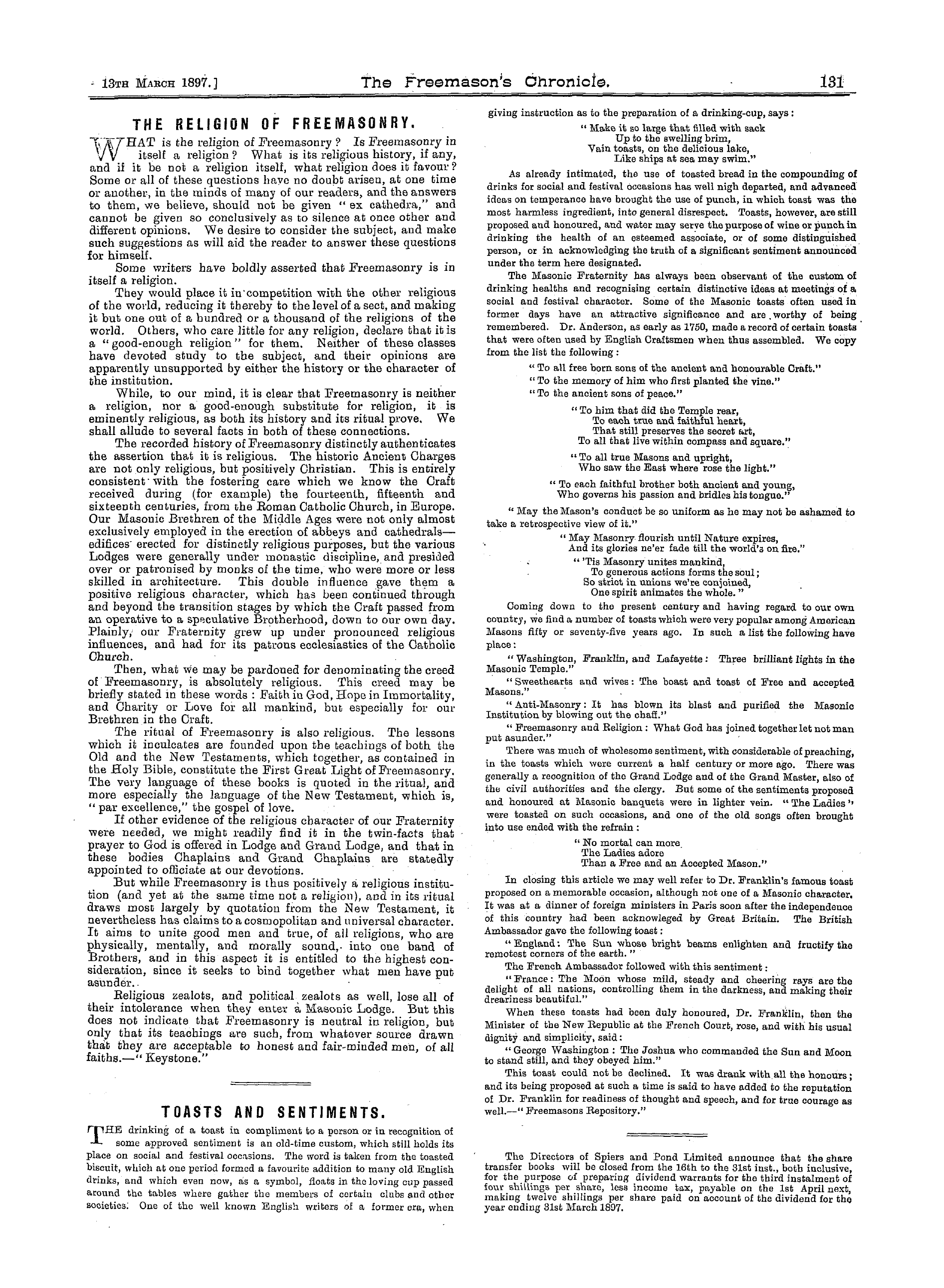
The Religion Of Freemasonry.
THE RELIGION OF FREEMASONRY .
T , | 7 HAT is the religion of Freemasonry ? Is Freemasonry in VV itself a religion ? What is its religious history , if any , and if it be not a religion itself , what religion does it favour ? Some or all of these questions have no doubt arisen , at one time or another , in tbe minds of many of our readers , and the answers
to them , we believe , should not be given " ex cathedra , " and cannot be given so conclusively as to silence at once other and different opinions . We desire to consider the subject , and make such suggestions as will aid the reader to answer these questions for himself .
Some writers have boldly asserted that Freemasonry is in itself a religion . They would place it in competition with the other religious of the world , reducing it thereby to the level of a sect , and making it but one out of a hundred or a thousand of the religions of the
world . Others , who care little for any religion , declare that it is a " good-enough religion " for them . Neither of these classes have devoted study to tbe subject , and their opinions are apparently unsupported by either the history or the character of the institution .
While , to our mind , it is clear that Freemasonry is neither a religion , nor a good-enough substitute for religion , it is eminently religious , as both its history and its ritual prove . We shall allude to several facts in both of these connections . The recorded history of Freemasonry distinctly authenticates the assertion that it is religious . The bistoric Ancient Charges
are not only religious , but positively Christian . This is entirely consistent'with the fostering care which we know the Craft received during ( for example ) the fourteentb , fifteenth and sixteenth centuries , from the Roman Catholic Church , in Europe . Our Masonic Brethren of the Middle Ages were not only almost exclusively employed in the erection of abbeys and
cathedralsedifices' erected for distinctly religious purposes , but the various Lodges were generally under monastic discipline , and presided over or patronised by monks of the time , who were more or less skilled in architecture . This double influence gave them a positive religious character , which has been continued through
and beyond the transition stages by which the Craft passed from an operative to a speculative Brotherhood , down to our own day . Plainly , our Fraternity grew up under pronounced religious influences , and had for its patrons ecclesiastics of the Catholic Church .
Then , what we may be pardoned for denominating the creed of Freemasonry , is absolutely religious . This creed may be briefly stated in these words : Faith in God , Hope in Immortality , and Charity or Love for all mankind , but especially for our Brethren in the Craft .
The ritual of Freemasonry is also religious . The lessons which it inculcates are founded upon the teachings of both the Old and the New Testaments , which together , as contained in the Holy Bible , constitute the First Great Light of Freemasonry . The very language of these books is quoted in the ritual , and more especially the language of the New Testament , which is , " par excellence , " the gospel of love .
If other evidence of the religious character of our Fraternity were needed , we might readily find it in the twin-facts that prayer to God is offered in Lodge and Grand Lodge , and that in these bodies Chaplains and Grand Chaplains are statedly appointed to officiate at our devotions .
But while Freemasonry is thus positively a religious institution ( and yet at the same time not a religion ) , and in its ritual draws most largely by quotation from the New Testament , it nevertheless has claims to a cosmopolitan and universal character .
It aims to unite good men and true , of all religions , who are physically , mentally , and morally sound ,- into one band of Brothers , and in this aspect it is entitled to the highest consideration , since it seeks to bind together what men have put asunder .
Eeligious zealots , and political zealots as well , lose all of their intolerance when they enter a Masonic Lodge . But this does not indicate that Freemasonry is neutral in religion , but only that its teachings are such , from whatever source drawn that they are acceptable to honest and fair-minded men , of all faiths . — " Keystone . "
Toasts And Sentiments.
TOASTS AND SENTIMENTS .
THE drinking o £ a toast in compliment to a person or in recognition of some approved sentiment is an old-time custom , which still holds its place on social and festival occasions . The word is taken from the toasted biscuit , which at one period formed a favourite addition to many old English drinks , and which even now , as a symbol , floats in the loving cup passed around the tables where gather the members of certain clubs and other societies : One of tho well known English writers of a former era , when
Toasts And Sentiments.
giving instruction as to the preparation of a drinking-cup , says : " Make it so large that filled with sack Up to the swelling brim , Vain toasts , on the delicious lake , Like ships at sea may swim . "
As already intimated , the use of toasted bread in the compounding of drinks for social and festival occasions has well nigh departed , and advanced ideas on temperance have brought the use of punch , in which toast was the most harmless ingredient , into general disrespect . Toasts , however , are still proposed and honoured , and water may serve the purpose of wine or punch in drinking the health of an esteemed associate , or of some distinguished person , or in acknowledging the truth of a significant sentiment announced under the term here designated .
The Masonic Fraternity has always been observant of the custom of drinking healths and recognising certain distinctive ideas at meetings of a social and festival character . Some of the Masonic toasts often used in
former days have an attractive significance and are . worthy of being remembered . Dr . Anderson , as early as 1750 , made a record of certain toasts that were often used by English Craftsmen when thus assembled . We copy from the list the following :
" To all free born sons of the ancient and honourable Craft . " " To the memory of him who first planted the vine . " " To the ancient sons of peace . " " To him that did the Temple rear , To each true and faithful heart , That still preserves the secret art , To all that live within compass and square . "
" To all true Masons and upright , Who saw the East where rose the light . "
" To each faithful brother both ancient and young , Who governs his passion and bridles his tongue . " " May the Mason ' s conduct be so uniform as he may not be ashamed to take a retrospective view of it . " " May Masonry flourish until Nature expires , And its glories ne ' er fade till the world ' s on fire . " " 'Tis Masonry unites mankind ,
To generous actions forms the soul ; So strict in unions we ' re conjoined , One spirit animates the whole . " Coming down to the present century and having regard to our own country , we find a number of toasts which were very popular among American Masons fifty or seventy-five years ago . In such a list the following have place :
" Washington , Franklin , and Lafayette : Three brilliant lights in the Masonic Temple . " " Sweethearts and wives : The boast and toast of Free and accepted Masons . "
" Anti-Masonry : It has blown its blast and purified the Masonic Institution by blowing out the chaff . " " Freemasonry and Religion : What God has joined together let not man put asunder . " There was much of wholesome sentiment , with considerable of preaching ,
in the toasts which were current a half century or more ago . There was generally a recognition of the Grand Lodge and of the Grand Master , also of the civil authorities and the clergy . But some of the sentiments proposed and honoured at Masonic banquets were in lighter vein . " The Ladies ' » were toasted on such occasions , and one of the old songs often brought into use ended with the refrain :
" No mortal can more . The Ladies adore Than a Free and an Accepted Mason . " In closing this article we may well refer to Dr . Franklin ' s famous toast proposed on a memorable occasion , although not one of a Masonic character . It was at a dinner of foreign ministers in Paris soon after the independence of this country had been acknowleged by Great Britain . The British Ambassador gave the following toast :
" England : The Sun whose bright beams enlighten and fructify the remotest corners of the earth . "
The French Ambassador followed with this sentiment : " France : The Moon whose mild , steady and cheering rays are the delight of all nations , controlling them in the darkness , and making their dreariness beautiful . " When these toasts had been duly honoured , Dr . Franklin , then the Minister of the New Republic at the French Court , rose , and with his usual dignity and simplicity , said :
" George Washington : The Joshua who commanded the Sun and Moon to stand still , and they obeyed him . " This toast could not be declined . It was drank with all the honours ; and its being proposed at such a time is said to have added to the reputation of Dr . Franklin for readiness of thought and speech , and for true courage as well . — " Freemasons Repository . "
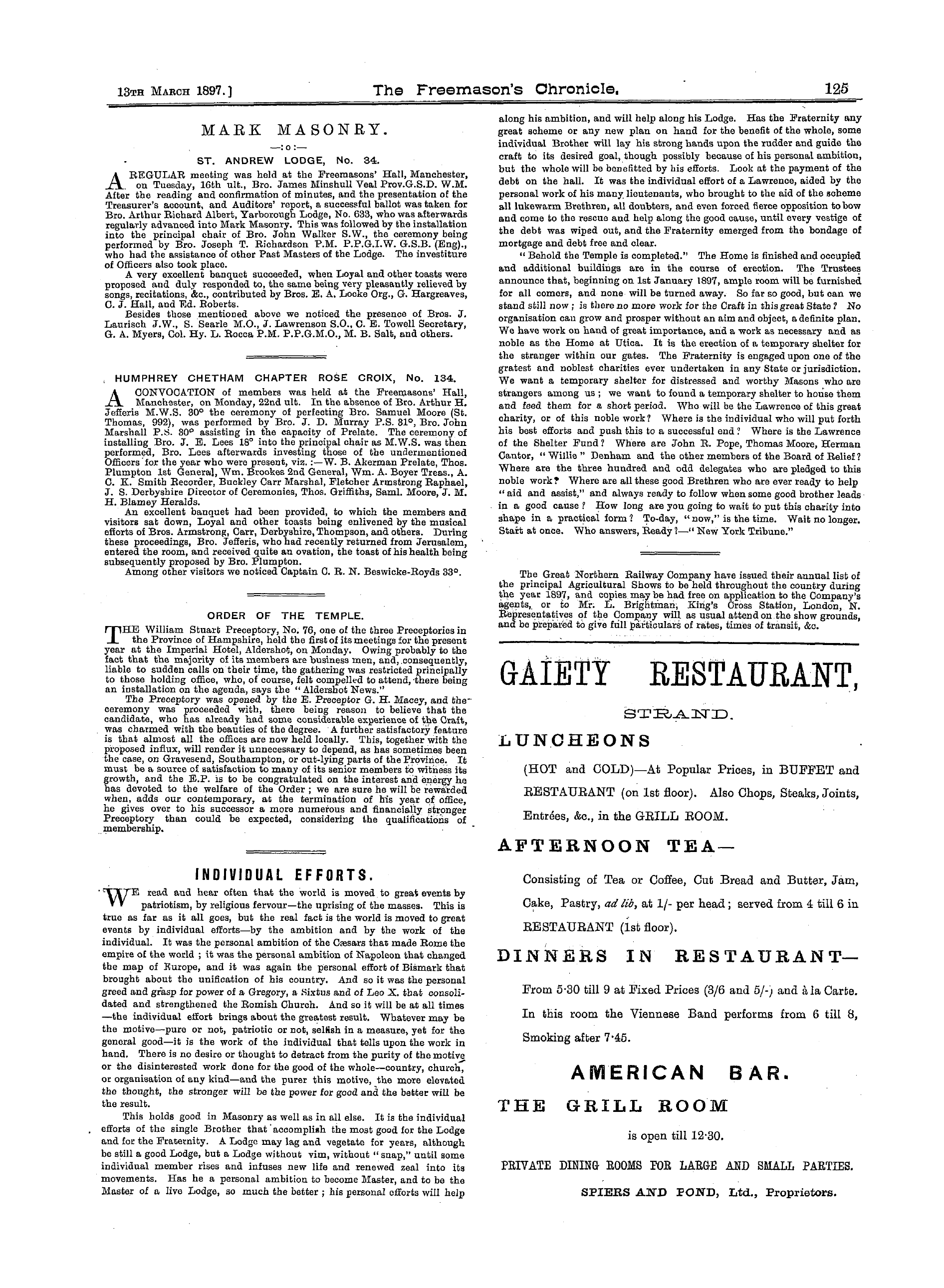
The Directors of Spiers and Pond Limited announce that the share transfer books will be closed from the 16 th to the 31 st inst ., both inclusive , for the purpose of preparing dividend warrants for the third instalment of four shillings per share , less income tax , payable on the 1 st April next , making twelve shillings per share paid on account of the dividend for tho year ending 31 st March 1897 .
Note: This text has been automatically extracted via Optical Character Recognition (OCR) software.
The Religion Of Freemasonry.
THE RELIGION OF FREEMASONRY .
T , | 7 HAT is the religion of Freemasonry ? Is Freemasonry in VV itself a religion ? What is its religious history , if any , and if it be not a religion itself , what religion does it favour ? Some or all of these questions have no doubt arisen , at one time or another , in tbe minds of many of our readers , and the answers
to them , we believe , should not be given " ex cathedra , " and cannot be given so conclusively as to silence at once other and different opinions . We desire to consider the subject , and make such suggestions as will aid the reader to answer these questions for himself .
Some writers have boldly asserted that Freemasonry is in itself a religion . They would place it in competition with the other religious of the world , reducing it thereby to the level of a sect , and making it but one out of a hundred or a thousand of the religions of the
world . Others , who care little for any religion , declare that it is a " good-enough religion " for them . Neither of these classes have devoted study to tbe subject , and their opinions are apparently unsupported by either the history or the character of the institution .
While , to our mind , it is clear that Freemasonry is neither a religion , nor a good-enough substitute for religion , it is eminently religious , as both its history and its ritual prove . We shall allude to several facts in both of these connections . The recorded history of Freemasonry distinctly authenticates the assertion that it is religious . The bistoric Ancient Charges
are not only religious , but positively Christian . This is entirely consistent'with the fostering care which we know the Craft received during ( for example ) the fourteentb , fifteenth and sixteenth centuries , from the Roman Catholic Church , in Europe . Our Masonic Brethren of the Middle Ages were not only almost exclusively employed in the erection of abbeys and
cathedralsedifices' erected for distinctly religious purposes , but the various Lodges were generally under monastic discipline , and presided over or patronised by monks of the time , who were more or less skilled in architecture . This double influence gave them a positive religious character , which has been continued through
and beyond the transition stages by which the Craft passed from an operative to a speculative Brotherhood , down to our own day . Plainly , our Fraternity grew up under pronounced religious influences , and had for its patrons ecclesiastics of the Catholic Church .
Then , what we may be pardoned for denominating the creed of Freemasonry , is absolutely religious . This creed may be briefly stated in these words : Faith in God , Hope in Immortality , and Charity or Love for all mankind , but especially for our Brethren in the Craft .
The ritual of Freemasonry is also religious . The lessons which it inculcates are founded upon the teachings of both the Old and the New Testaments , which together , as contained in the Holy Bible , constitute the First Great Light of Freemasonry . The very language of these books is quoted in the ritual , and more especially the language of the New Testament , which is , " par excellence , " the gospel of love .
If other evidence of the religious character of our Fraternity were needed , we might readily find it in the twin-facts that prayer to God is offered in Lodge and Grand Lodge , and that in these bodies Chaplains and Grand Chaplains are statedly appointed to officiate at our devotions .
But while Freemasonry is thus positively a religious institution ( and yet at the same time not a religion ) , and in its ritual draws most largely by quotation from the New Testament , it nevertheless has claims to a cosmopolitan and universal character .
It aims to unite good men and true , of all religions , who are physically , mentally , and morally sound ,- into one band of Brothers , and in this aspect it is entitled to the highest consideration , since it seeks to bind together what men have put asunder .
Eeligious zealots , and political zealots as well , lose all of their intolerance when they enter a Masonic Lodge . But this does not indicate that Freemasonry is neutral in religion , but only that its teachings are such , from whatever source drawn that they are acceptable to honest and fair-minded men , of all faiths . — " Keystone . "
Toasts And Sentiments.
TOASTS AND SENTIMENTS .
THE drinking o £ a toast in compliment to a person or in recognition of some approved sentiment is an old-time custom , which still holds its place on social and festival occasions . The word is taken from the toasted biscuit , which at one period formed a favourite addition to many old English drinks , and which even now , as a symbol , floats in the loving cup passed around the tables where gather the members of certain clubs and other societies : One of tho well known English writers of a former era , when
Toasts And Sentiments.
giving instruction as to the preparation of a drinking-cup , says : " Make it so large that filled with sack Up to the swelling brim , Vain toasts , on the delicious lake , Like ships at sea may swim . "
As already intimated , the use of toasted bread in the compounding of drinks for social and festival occasions has well nigh departed , and advanced ideas on temperance have brought the use of punch , in which toast was the most harmless ingredient , into general disrespect . Toasts , however , are still proposed and honoured , and water may serve the purpose of wine or punch in drinking the health of an esteemed associate , or of some distinguished person , or in acknowledging the truth of a significant sentiment announced under the term here designated .
The Masonic Fraternity has always been observant of the custom of drinking healths and recognising certain distinctive ideas at meetings of a social and festival character . Some of the Masonic toasts often used in
former days have an attractive significance and are . worthy of being remembered . Dr . Anderson , as early as 1750 , made a record of certain toasts that were often used by English Craftsmen when thus assembled . We copy from the list the following :
" To all free born sons of the ancient and honourable Craft . " " To the memory of him who first planted the vine . " " To the ancient sons of peace . " " To him that did the Temple rear , To each true and faithful heart , That still preserves the secret art , To all that live within compass and square . "
" To all true Masons and upright , Who saw the East where rose the light . "
" To each faithful brother both ancient and young , Who governs his passion and bridles his tongue . " " May the Mason ' s conduct be so uniform as he may not be ashamed to take a retrospective view of it . " " May Masonry flourish until Nature expires , And its glories ne ' er fade till the world ' s on fire . " " 'Tis Masonry unites mankind ,
To generous actions forms the soul ; So strict in unions we ' re conjoined , One spirit animates the whole . " Coming down to the present century and having regard to our own country , we find a number of toasts which were very popular among American Masons fifty or seventy-five years ago . In such a list the following have place :
" Washington , Franklin , and Lafayette : Three brilliant lights in the Masonic Temple . " " Sweethearts and wives : The boast and toast of Free and accepted Masons . "
" Anti-Masonry : It has blown its blast and purified the Masonic Institution by blowing out the chaff . " " Freemasonry and Religion : What God has joined together let not man put asunder . " There was much of wholesome sentiment , with considerable of preaching ,
in the toasts which were current a half century or more ago . There was generally a recognition of the Grand Lodge and of the Grand Master , also of the civil authorities and the clergy . But some of the sentiments proposed and honoured at Masonic banquets were in lighter vein . " The Ladies ' » were toasted on such occasions , and one of the old songs often brought into use ended with the refrain :
" No mortal can more . The Ladies adore Than a Free and an Accepted Mason . " In closing this article we may well refer to Dr . Franklin ' s famous toast proposed on a memorable occasion , although not one of a Masonic character . It was at a dinner of foreign ministers in Paris soon after the independence of this country had been acknowleged by Great Britain . The British Ambassador gave the following toast :
" England : The Sun whose bright beams enlighten and fructify the remotest corners of the earth . "
The French Ambassador followed with this sentiment : " France : The Moon whose mild , steady and cheering rays are the delight of all nations , controlling them in the darkness , and making their dreariness beautiful . " When these toasts had been duly honoured , Dr . Franklin , then the Minister of the New Republic at the French Court , rose , and with his usual dignity and simplicity , said :
" George Washington : The Joshua who commanded the Sun and Moon to stand still , and they obeyed him . " This toast could not be declined . It was drank with all the honours ; and its being proposed at such a time is said to have added to the reputation of Dr . Franklin for readiness of thought and speech , and for true courage as well . — " Freemasons Repository . "
The Directors of Spiers and Pond Limited announce that the share transfer books will be closed from the 16 th to the 31 st inst ., both inclusive , for the purpose of preparing dividend warrants for the third instalment of four shillings per share , less income tax , payable on the 1 st April next , making twelve shillings per share paid on account of the dividend for tho year ending 31 st March 1897 .