-
Articles/Ads
Article WHAT INDUCED YOU TO BECOME A MASON. ← Page 2 of 2 Article THE BENEVOLENT FESTIVAL. Page 1 of 2 →
Note: This text has been automatically extracted via Optical Character Recognition (OCR) software.
What Induced You To Become A Mason.
admission at the door of a Masonic Lodge . The design and purpose of the Institution is also embraced in this answer to a great extent , for it not only indicates what a man expects to gain for himself by his admission , but it also expresses what he is willing to do for others with whom he is to become
associated . It thus becomes a question of great importance , not only to the party asking it , but equally sn to him-who is required to answer . In considering it each should receive equal attention . The man who becomes a Mason pays for that privilege . He deposits with his petition a sum of iacney
which is to become the property of the Lodge when he is admitted . He expects to receive in some way full value for the money invested . Having made the declaration that he is not influenced by mercenary motives , he cannot expect any pecuniary benefits in becoming a Mason . The inducements
must necessarily be anticipated benefits of a social nature , such as one would naturally expect to find in an Institution that has enrolled in its membership so many of the greatest and best men in all ages of the world . The money paid is in consideration of the necessary expenses of the Lodge in
conferring the Degrees . It is not a money-making transaction to either party , but both expect to be benefited thereby . To what extent they will be , depends very largely upon the impression that is made on the man in making him a Mason . Let us take for example the membership of any
Lodge composed of one hundred members . Plow many real working Masons are there in it ? An examination of the records shows that less than one-fourth are regular attendants at the stated meetings . Of that number , as a general rule , less than one-half take an active part in the proceedings . If
called to take a part in the work a still less number are found qualified to fill any important position . The working force is generally less than a dozen members . W hy so large a proportion of Masons take no active interest in the prosperity of their Lodge and in Masonry generally is a question not easily
answered . Most of them profess great love for the Institution , and are willing to contribute the amount of annual dues required to defray the expenses of the Lodge . This seems to be the extent of their ambition and all they think is required of them . Notices to attend meetings of the Lodge
are generally disregarded . A call of the Lodge to attend the funeral of a dead Brother often fails to brings out a respectable number . The impression made upon the public in such instances cannot be favourable to Masonry . It must be evident to every Mason that he is not living up to his
obligations while thus neglecting his Lodge . Whatever induced such a one to seek admission he is apparently easily satisfied after having gained an entrance . Unfortunately for the good of Masonry , and his Lodge especially , he •contributes
still less than he receives . The object for which he became a Mason has been abandoned , and like the barren fig tree he " cumbereth the ground . "— " Masonic Advocate . "
Often one must battle heroically against inward impulses to be honest , but it pays to fight the battle to a successful end . Often it appears well-nigh impossible to curb the rampings of propensity which would lead us into excesses extremely hurtful to ourselves or others , but it pays to exert
oneself to the utmost to preserve the dignity and ascend ency of the higher powers . Often we find ourselves engirted by darK waters of discouragement , against which we seemingly struggle without prospect of reaching harbour , but it pays to buffet the waves with a determination to the last . Ex
Noticeable as the growth is throughout this country , from nothing a century and two-thirds ago to nearly 800 , 000 to-day , the growth of the last decade is even more significant . The Lodges of the country have grown in the same period from the number of 9 , 775 to the number of 13 , 628 , and the
membership from 569 , 000 to 790 , 428 . So far from being dead or sleeping , Masonry in no country in the world and at no time in the world ' s history , has been so vitalised and progressive as in this country at the present moment . Samuel J . Elder , Mass .
Masonry teaches that obedience to duty is the noblest attribute of true manhood , and he who stands in his integrity , finds it easy to exemplify the virtues of Masonry , Brotherly love , relief , and truth , for it brings him in sympathetic touch , one with another . —Edward S . Lippitt , Colorado .
The Benevolent Festival.
THE BENEVOLENT FESTIVAL .
THE banquet was served in the large Hall of the Freemasons ' Tavern , the capacity of which was taxed to its utmost limits by the large number of the Stewards , indeed it was necessary to have '" overflow" assemblies in other parts of Messrs . Spiers and Pond ' s well known establishment .
The chair was occupied by the Deputy Grand Master of England , the Right Hon . the Earl of Warwick , who was particularly well supported by members of the Province of Essex , of which his lordship has long been the Masonic chief , the entire
centre table being occupied bv Brethren from that district , while many more were to be found in other parts of the Hall ; indeed it seemed as though members of the Chairman ' s Province were strongly in evidence all over the room when , later in the evening , Lord Warwick drank with the representatives of his county .
At the conclusion of the dinner the President rose to give the Loyal toast . He said it was the first occasion on which he had had the pleasure of submitting to the Brethren the toast he was about to propose , —that of the King and the Craft . They had passed recently through a very sad time ; and as loyal subjects—and Freemasons were all loyal subjects—had been filled with regret at
the loss of the greatest sovereign known in the history of the world . It had long been the rule to associate Her Majesty ' s name with the Craft ; now they drank to the King and the Craft . The Brethren all knew how much His Majesty had done for the Craft of Freemasonry , > and they recognised he could not continue to do as much in the future , in view of his many other duties ; but they
were delighted that he would continue association with them , as Protector of the English Craft . The Brethren of Freemasonry knew the ability of His Majesty , and had the greatest confidence that he would prove himself a great King ; he had all the qualities that would endear him to his people , and had already assured them that his aim would be to study his people ' s welfare .
The next toast was that of Her Most Gracious Majesty the Queen and the other members of the Royal Family . Lord Warwick , in proposing it , said that from the first moment the King brought his bride to our shores the Queen had been the most popular woman in the Kingdom . They all knew the great trials Her Majesty had passed through , especially when she lost her eldest
son , and more recentlv when she lost her mother ; but she had evinced her readiness and willingness to take her place in the country , and they trusted she might live for many years to enjoy it . They could picture the heartv reception the Duke and Duchess of Cornwall and York would meet with on their visit to the
colonies , and could imagine that visit would cement , if possible , the ties of brotherly love that existed between the old country and the colonies . The members of the Craft were delighted to hear they were to have the Duke of Connaught as Grand Master , and could assure him of a most hearty reception at his installation .
The next toast was that of the Earl Amherst Pro G . M . In proposing it ^ he Chairman said the Brethren all knew Lord Amherst and loved and respected him . They recognised what an excellent Pro Grand Master he was , and knew , from the time he had been associated with the Craft , and the time he had ruled over the
important Province of Kent , that he was experienced and well qualified for his important position . They one and all hoped that Lord Amherst might long be spared to assist the Grand Master ; there was just now a sort of interregnum , and members of the Craft recognised the greater responsibility that consequently fell to the share of the Pro Grand Master .
Bro . Middlemass P . M . 5 P . G . S . proposed the next toast , that of the Earl of Warwick D . G . M . and the present and past Grand Officers . He felt the toast required but few words from him . The Brethren knew how much they were indebted to the Officers who conducted the business of Grand Lodge , and those who had seen the Chairman of the day in his position at its assemblies
would agree that he was well qualified for his position . In like manner he was backed up and supported by the Officers of Grand Lodge—those who were in office at the present , as well as those who had served in years gone by . The toast was 'acknowledged bv the Grand Chaplain , who ¦ said that as their noble President had shortly to respond to the toast of
his own health as Chairman , he had deputed him to briefly respond on behalf of the Grand Officers . Whatever on earth the Grand Officers might have accomplished , or whatever renown they mayhave won in Masonry it was certain they had always shown sympathy—and wherever they could , practical help—for the Charities of the Order . He thanked the Brethren for their reception of the toast .
The Chairman now said they had come to what he thought was the toast of the evening , that of Success to the Royal Masonic Benevolent Institution for Aged Freemasons and Widows of Freemasons . The Brethren and others fully recognised what a country theirs was for charity , and in a good cause how easy it was to get money . On occasions such as the present it was usual to get some Chairman of
position who should make such an appeal to his audience as would induce them to liberally respond , but on that special occasion matters were somewhat different for the president , inasmuch as the work had already been done for him , and it only remained for him to congratulate the Stewards who had worked so energetically to secure the good result which he believed was shortly to be announced . He must confess he would feel very if it his
nervous depended on personal efforts as to what the amount of the subscriptions would be , but in this case he recognised that among the most charitable of his countrymen were the Freemasons of England , land no matter who occupied the chair on such an occasion -as the present , the Brethren would do their utmost to support him . It had been his privilege to preside on two previous occasions , on behalf of the other two Institutions , and if his memory


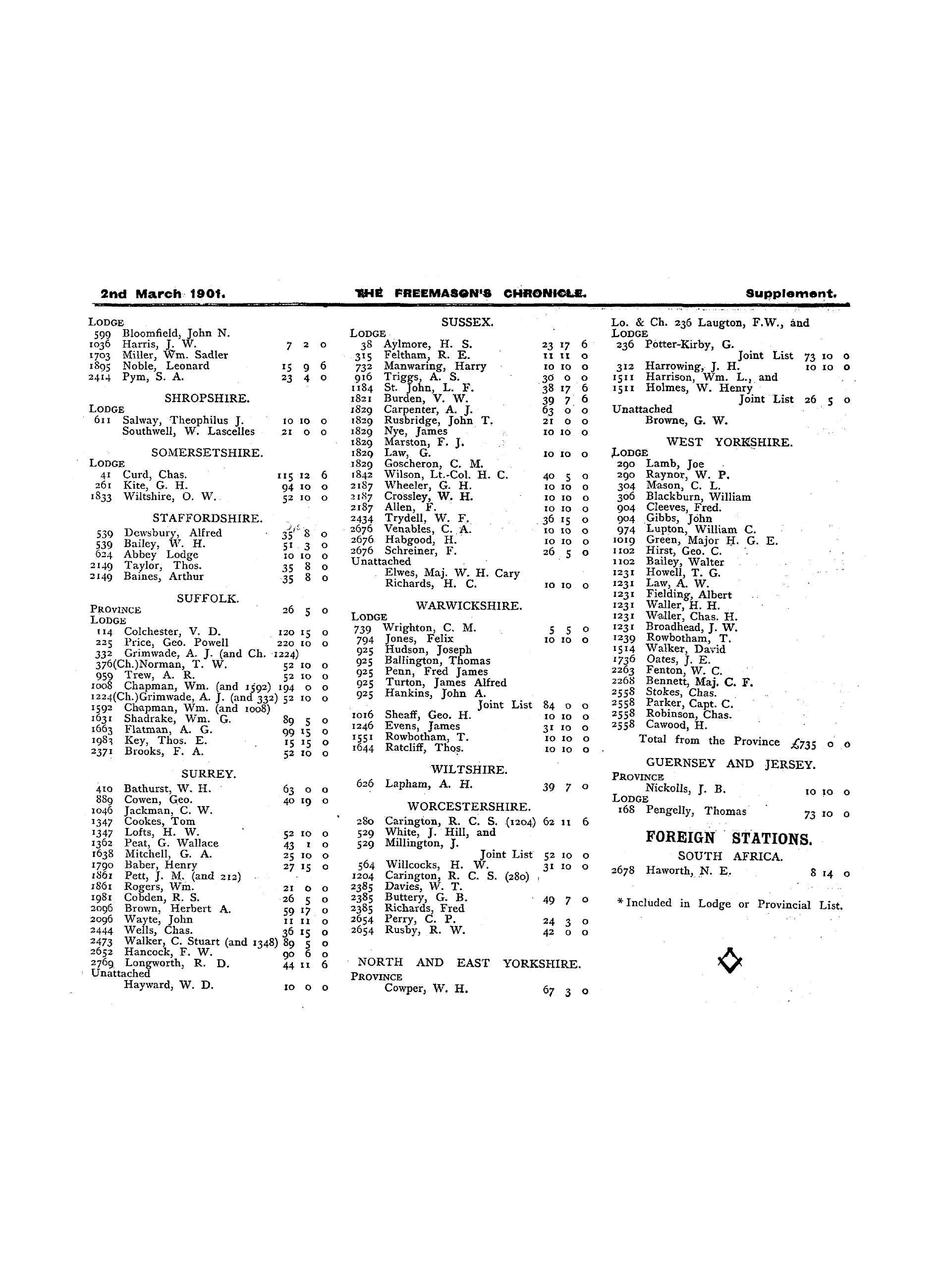
Note: This text has been automatically extracted via Optical Character Recognition (OCR) software.
What Induced You To Become A Mason.
admission at the door of a Masonic Lodge . The design and purpose of the Institution is also embraced in this answer to a great extent , for it not only indicates what a man expects to gain for himself by his admission , but it also expresses what he is willing to do for others with whom he is to become
associated . It thus becomes a question of great importance , not only to the party asking it , but equally sn to him-who is required to answer . In considering it each should receive equal attention . The man who becomes a Mason pays for that privilege . He deposits with his petition a sum of iacney
which is to become the property of the Lodge when he is admitted . He expects to receive in some way full value for the money invested . Having made the declaration that he is not influenced by mercenary motives , he cannot expect any pecuniary benefits in becoming a Mason . The inducements
must necessarily be anticipated benefits of a social nature , such as one would naturally expect to find in an Institution that has enrolled in its membership so many of the greatest and best men in all ages of the world . The money paid is in consideration of the necessary expenses of the Lodge in
conferring the Degrees . It is not a money-making transaction to either party , but both expect to be benefited thereby . To what extent they will be , depends very largely upon the impression that is made on the man in making him a Mason . Let us take for example the membership of any
Lodge composed of one hundred members . Plow many real working Masons are there in it ? An examination of the records shows that less than one-fourth are regular attendants at the stated meetings . Of that number , as a general rule , less than one-half take an active part in the proceedings . If
called to take a part in the work a still less number are found qualified to fill any important position . The working force is generally less than a dozen members . W hy so large a proportion of Masons take no active interest in the prosperity of their Lodge and in Masonry generally is a question not easily
answered . Most of them profess great love for the Institution , and are willing to contribute the amount of annual dues required to defray the expenses of the Lodge . This seems to be the extent of their ambition and all they think is required of them . Notices to attend meetings of the Lodge
are generally disregarded . A call of the Lodge to attend the funeral of a dead Brother often fails to brings out a respectable number . The impression made upon the public in such instances cannot be favourable to Masonry . It must be evident to every Mason that he is not living up to his
obligations while thus neglecting his Lodge . Whatever induced such a one to seek admission he is apparently easily satisfied after having gained an entrance . Unfortunately for the good of Masonry , and his Lodge especially , he •contributes
still less than he receives . The object for which he became a Mason has been abandoned , and like the barren fig tree he " cumbereth the ground . "— " Masonic Advocate . "
Often one must battle heroically against inward impulses to be honest , but it pays to fight the battle to a successful end . Often it appears well-nigh impossible to curb the rampings of propensity which would lead us into excesses extremely hurtful to ourselves or others , but it pays to exert
oneself to the utmost to preserve the dignity and ascend ency of the higher powers . Often we find ourselves engirted by darK waters of discouragement , against which we seemingly struggle without prospect of reaching harbour , but it pays to buffet the waves with a determination to the last . Ex
Noticeable as the growth is throughout this country , from nothing a century and two-thirds ago to nearly 800 , 000 to-day , the growth of the last decade is even more significant . The Lodges of the country have grown in the same period from the number of 9 , 775 to the number of 13 , 628 , and the
membership from 569 , 000 to 790 , 428 . So far from being dead or sleeping , Masonry in no country in the world and at no time in the world ' s history , has been so vitalised and progressive as in this country at the present moment . Samuel J . Elder , Mass .
Masonry teaches that obedience to duty is the noblest attribute of true manhood , and he who stands in his integrity , finds it easy to exemplify the virtues of Masonry , Brotherly love , relief , and truth , for it brings him in sympathetic touch , one with another . —Edward S . Lippitt , Colorado .
The Benevolent Festival.
THE BENEVOLENT FESTIVAL .
THE banquet was served in the large Hall of the Freemasons ' Tavern , the capacity of which was taxed to its utmost limits by the large number of the Stewards , indeed it was necessary to have '" overflow" assemblies in other parts of Messrs . Spiers and Pond ' s well known establishment .
The chair was occupied by the Deputy Grand Master of England , the Right Hon . the Earl of Warwick , who was particularly well supported by members of the Province of Essex , of which his lordship has long been the Masonic chief , the entire
centre table being occupied bv Brethren from that district , while many more were to be found in other parts of the Hall ; indeed it seemed as though members of the Chairman ' s Province were strongly in evidence all over the room when , later in the evening , Lord Warwick drank with the representatives of his county .
At the conclusion of the dinner the President rose to give the Loyal toast . He said it was the first occasion on which he had had the pleasure of submitting to the Brethren the toast he was about to propose , —that of the King and the Craft . They had passed recently through a very sad time ; and as loyal subjects—and Freemasons were all loyal subjects—had been filled with regret at
the loss of the greatest sovereign known in the history of the world . It had long been the rule to associate Her Majesty ' s name with the Craft ; now they drank to the King and the Craft . The Brethren all knew how much His Majesty had done for the Craft of Freemasonry , > and they recognised he could not continue to do as much in the future , in view of his many other duties ; but they
were delighted that he would continue association with them , as Protector of the English Craft . The Brethren of Freemasonry knew the ability of His Majesty , and had the greatest confidence that he would prove himself a great King ; he had all the qualities that would endear him to his people , and had already assured them that his aim would be to study his people ' s welfare .
The next toast was that of Her Most Gracious Majesty the Queen and the other members of the Royal Family . Lord Warwick , in proposing it , said that from the first moment the King brought his bride to our shores the Queen had been the most popular woman in the Kingdom . They all knew the great trials Her Majesty had passed through , especially when she lost her eldest
son , and more recentlv when she lost her mother ; but she had evinced her readiness and willingness to take her place in the country , and they trusted she might live for many years to enjoy it . They could picture the heartv reception the Duke and Duchess of Cornwall and York would meet with on their visit to the
colonies , and could imagine that visit would cement , if possible , the ties of brotherly love that existed between the old country and the colonies . The members of the Craft were delighted to hear they were to have the Duke of Connaught as Grand Master , and could assure him of a most hearty reception at his installation .
The next toast was that of the Earl Amherst Pro G . M . In proposing it ^ he Chairman said the Brethren all knew Lord Amherst and loved and respected him . They recognised what an excellent Pro Grand Master he was , and knew , from the time he had been associated with the Craft , and the time he had ruled over the
important Province of Kent , that he was experienced and well qualified for his important position . They one and all hoped that Lord Amherst might long be spared to assist the Grand Master ; there was just now a sort of interregnum , and members of the Craft recognised the greater responsibility that consequently fell to the share of the Pro Grand Master .
Bro . Middlemass P . M . 5 P . G . S . proposed the next toast , that of the Earl of Warwick D . G . M . and the present and past Grand Officers . He felt the toast required but few words from him . The Brethren knew how much they were indebted to the Officers who conducted the business of Grand Lodge , and those who had seen the Chairman of the day in his position at its assemblies
would agree that he was well qualified for his position . In like manner he was backed up and supported by the Officers of Grand Lodge—those who were in office at the present , as well as those who had served in years gone by . The toast was 'acknowledged bv the Grand Chaplain , who ¦ said that as their noble President had shortly to respond to the toast of
his own health as Chairman , he had deputed him to briefly respond on behalf of the Grand Officers . Whatever on earth the Grand Officers might have accomplished , or whatever renown they mayhave won in Masonry it was certain they had always shown sympathy—and wherever they could , practical help—for the Charities of the Order . He thanked the Brethren for their reception of the toast .
The Chairman now said they had come to what he thought was the toast of the evening , that of Success to the Royal Masonic Benevolent Institution for Aged Freemasons and Widows of Freemasons . The Brethren and others fully recognised what a country theirs was for charity , and in a good cause how easy it was to get money . On occasions such as the present it was usual to get some Chairman of
position who should make such an appeal to his audience as would induce them to liberally respond , but on that special occasion matters were somewhat different for the president , inasmuch as the work had already been done for him , and it only remained for him to congratulate the Stewards who had worked so energetically to secure the good result which he believed was shortly to be announced . He must confess he would feel very if it his
nervous depended on personal efforts as to what the amount of the subscriptions would be , but in this case he recognised that among the most charitable of his countrymen were the Freemasons of England , land no matter who occupied the chair on such an occasion -as the present , the Brethren would do their utmost to support him . It had been his privilege to preside on two previous occasions , on behalf of the other two Institutions , and if his memory