-
Articles/Ads
Article LABOUR AND REFRESHMENT. Page 1 of 1 Article LABOUR AND REFRESHMENT. Page 1 of 1 Article Masonic Sonnets, No. 112. Page 1 of 1
Note: This text has been automatically extracted via Optical Character Recognition (OCR) software.
Labour And Refreshment.
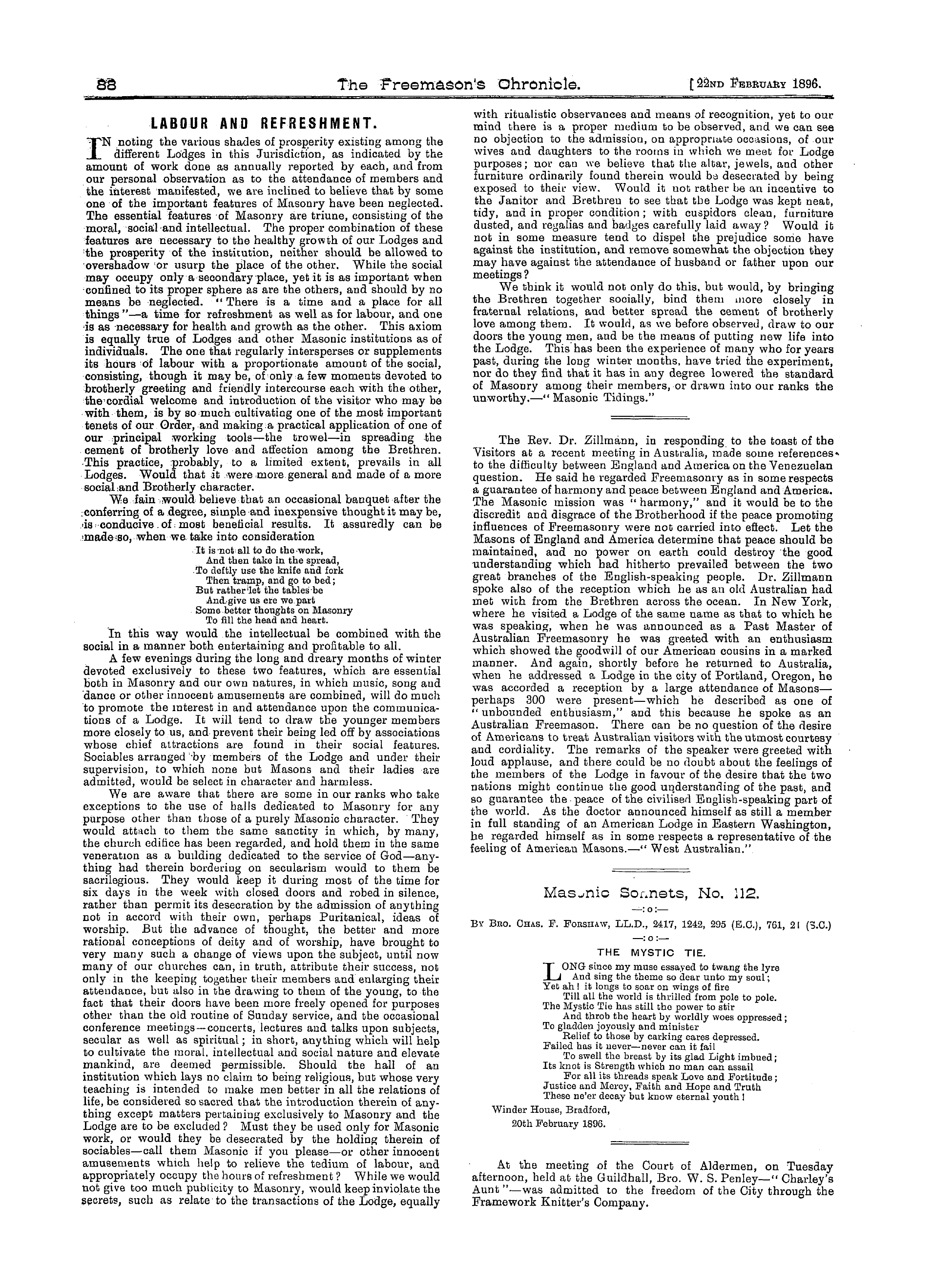
LABOUR AND REFRESHMENT .
IN noting the various shades of prosperity existing among the different Lodges in this Jurisdiction , as indicated by the amount of work done as annually reported by each , and from our personal observation as to the attendance of members and the interest manifested , we are inclined to believe that by some one of the important features of Masonry have been neglected .
The essential features of Masonry are triune , consisting of the moral , social and intellectual . The proper combination of these features are necessary to the healthy growth of our Lodges and the prosperity of the institution , neither should be allowed to overshadow or usurp the place of the other . While the social may occupy only a secondary place , yet it is as important when
confined to its proper sphere as are the others , and shonld by no means be neglected . " There is a time and a place for all things "—a time for refreshment as well as for labour , and one is as necessary for health and growth as the other . This axiom is equally true of Lodges and other Masonic institutions as of individuals . The one that regularly intersperses or supplements
its hours of labour with a proportionate amount of the social , consisting , though it may be , of only a few moments devoted to brotherly greeting and friendly intercourse each with the other , thecordial welcome and introduction of the visitor who may be with them , is by so much cultivating one of the most important
tenets of our Order , and making a practical application of one of our principal working tools—the trowel—in spreading the cement of brotherly love and affection among the Brethren . This practice , probably , to a limited extent , prevails in all Lodges . Would that it were more general and made of a more social _ nd Brotherly character .
We fain -would believe that an occasional banquet after the conferring of a degree , simple and inexpensive thought it may be , is conducive . of ; most beneficial results . It assuredly can be made-so , when we . take into consideration
It is not : all to do the work , And then take in the spread , To deftly use the knife and fork Then tramp , and go to bed ; But rather'let the tables be
AncLgive us ere we part Some better thoughts on Masonry To fill the head and heart . In this way would the intellectual be combined with the social in a manner both entertaining and profitable to all .
A few evenings during the long and dreary months of winter devoted exclusively to these two features , which are essential both in Masonry and our own natures , in which music , song and dance or other innocent amusements are combined , will do much to promote the interest in and attendance upon the
communications of a Lodge . It will tend to draw the younger members more closely to us , and prevent their being led off by associations whose chief attractions are found in their social features . Sociables arranged -by members of the Lodge and under their supervision , to which none but Masons and their ladies are admitted , would be select in character and harmless .
We are aware that there are some in our ranks who take exceptions to the use of halls dedicated to Masonry for any purpose other than those of a purely Masonic character . They would attach to them the same sanctity in which , by many , the church edifice has been regarded , and hold them in the same veneration as a building dedicated to the service of
God—anything had therein bordering on secularism would to them be sacrilegious . They would keep it during most of the time for six days in the week with closed doors and robed in silence , rather than permit its desecration by the admission of anything not in accord with their own , perhaps Puritanical , ideas of worship . But the advance of thought , the better and more
rational conceptions of deity and of worship , have brought to very many such a change of views upon the subject , until now many of our churches can , in truth , attribute their success , not only in the keeping together their members and enlarging their attendance , but also in the drawing to them of the young , to the fact that their doors have been more freely opened for purposes
other than the old routine of Sunday service , and the occasional conference meetings —concerts , lectures and talks upon subjects , secular as well as spiritual ; in short , anything which will help to cultivate the moral , intellectual and social nature and elevate mankind , are deemed permissible . Should the hall of an institution which lays no claim to being religious , but whose very
teaching is intended to make men better in all the relations of life , be considered so sacred that the introduction therein of anything except matters pertaining exclusively to Masonry and the Lodge are to be excluded ? Must they be used only for Masonic work , or would they be desecrated by the holding therein of
sociables—call them Masonic if you please—or other innocent amusements which help to relieve the tedium of labour , and appropriately occupy the hours of refreshment ? While we would not give too much publicity to Masonry , would keep inviolate the secrets , such as relate to the transactions of the Lodge , equally
Labour And Refreshment.
with ritualistic observances and means of recognition , yet to our mind there is a proper medium to be observed , and we can see no objection to the admission , on appropriate occasions , of our wives and daughters to the rooms in which we meet for Lodge purposes ; nor can we believe that the altar , jewels , and other
furniture ordinarily found therein would ba desecrated by being exposed to their view . Would it not rather be an incentive to the Janitor and Brethren to see that tbe Lodge was kept neat , tidy , and in proper condition ; with cuspidors clean , furniture
dusted , and regalias and badges carefully laid away ? Would it not in some measure tend to dispel the prejudice some have against the institution , and remove somewhat the objection they may have against the attendance of husband or father upon our meetings ?
We think it would not only do this , but would , by bringing the Brethren together socially , bind them more closely in fraternal relations , aud better spread the cement of brotherly love among them . It would , as we before observed , draw to our doors the young men , and be the means of putting new life into
the Lodge . This has been the experience of many who for years past , during the long winter months , have tried the experiment , nor do they find that it has in any degree lowered the standard of Masonry among their members , or drawn into our ranks the unworthy . —" Masonic Tidings . "
The Eev . Dr . Zillmann , in responding to the toast of the Visitors at a recent meeting in Australia , made some references * to the difficulty between England and America on the Venezuelan question . He said he regarded Freemasonry as in some respects a guarantee of harmony and peace between England and America .
The Masonic mission was " harmony , " and it would be to the discredit and disgrace of the Brotherhood if the peace promoting influences of Freemasonry were not carried into effect . Let the Masons of England and America determine that peace should be maintained , and no power on earth could destroy the good
understanding which had hitherto prevailed between the two great branches of the English-speaking people . Dr . Zillmann spoke also of the reception which he as an old Australian had met with from the Brethren across the ocean . In New York , where he visited a Lodge of the same name as that to which he
was speaking , when he was announced as a Past Master of Australian Freemasonry he was greeted with an enthusiasm which showed the goodwill of our American cousins in a marked manner . And again , shortly before he returned to Australia , when he addressed a Lodge in the city of Portland , Oregon , he
was accorded a reception by a large attendance of Masonsperhaps 300 were present—which he described as one of " unbounded enthusiasm , " and this because he spoke as an Australian Freemason . There can be no question of the desire of Americans to treat Australian visitors with the utmost courtesy
and cordiality . The remarks of the speaker were greeted with loud applause , and there could be no doubt about the feelings of the members of the Lodge in favour of the desire that the two nations might continue the good understanding of the past , and
so guarantee the peace of the civilised English-speaking part of the world . As the doctor announced himself as still a member in full standing of an American Lodge in Eastern Washington , he regarded himself as in some respects a representative of the feeling of American Masons . — " West Australian . "
Masonic Sonnets, No. 112.
Masonic Sonnets , No . 112 .
BY BRO . CHAS . F . FORSHAW , LL . D ., 2417 , 1242 , 295 ( B . C . ) , 761 , 21 ( 3 . 0 . )
THE MYSTIC TIE . LONG since my muse essayed to twang the lyre And sing the theme so dear unto my soul ; Yet ah ! it longs to soar on wings of fire Till all the world is thrilled from pole to pole . The Mystic Tie has still tho power to stir
And throb the heart by worldly woes oppressed ; To gladden joyously and minister Belief to those by carking cares depressed . Failed has it never—never can it fail To swell the breast by its glad Light imbued ; Its knot is Strength which no man can assail
For all its threads speak Love and Fortitude ; Justice and Mercy , Faith and Hope and Truth These ne ' er decay but know eternal youth I Winder House , Bradford , 20 th February 1896 .
At the meeting of the Court of Aldermen , on Tuesday afternoon , held at the Guildhall , Bro . W . S . Penley— " Charley ' s Aunt "—was admitted to the freedom of the City through the Framework Knitter ' s Company .


Note: This text has been automatically extracted via Optical Character Recognition (OCR) software.
Labour And Refreshment.
LABOUR AND REFRESHMENT .
IN noting the various shades of prosperity existing among the different Lodges in this Jurisdiction , as indicated by the amount of work done as annually reported by each , and from our personal observation as to the attendance of members and the interest manifested , we are inclined to believe that by some one of the important features of Masonry have been neglected .
The essential features of Masonry are triune , consisting of the moral , social and intellectual . The proper combination of these features are necessary to the healthy growth of our Lodges and the prosperity of the institution , neither should be allowed to overshadow or usurp the place of the other . While the social may occupy only a secondary place , yet it is as important when
confined to its proper sphere as are the others , and shonld by no means be neglected . " There is a time and a place for all things "—a time for refreshment as well as for labour , and one is as necessary for health and growth as the other . This axiom is equally true of Lodges and other Masonic institutions as of individuals . The one that regularly intersperses or supplements
its hours of labour with a proportionate amount of the social , consisting , though it may be , of only a few moments devoted to brotherly greeting and friendly intercourse each with the other , thecordial welcome and introduction of the visitor who may be with them , is by so much cultivating one of the most important
tenets of our Order , and making a practical application of one of our principal working tools—the trowel—in spreading the cement of brotherly love and affection among the Brethren . This practice , probably , to a limited extent , prevails in all Lodges . Would that it were more general and made of a more social _ nd Brotherly character .
We fain -would believe that an occasional banquet after the conferring of a degree , simple and inexpensive thought it may be , is conducive . of ; most beneficial results . It assuredly can be made-so , when we . take into consideration
It is not : all to do the work , And then take in the spread , To deftly use the knife and fork Then tramp , and go to bed ; But rather'let the tables be
AncLgive us ere we part Some better thoughts on Masonry To fill the head and heart . In this way would the intellectual be combined with the social in a manner both entertaining and profitable to all .
A few evenings during the long and dreary months of winter devoted exclusively to these two features , which are essential both in Masonry and our own natures , in which music , song and dance or other innocent amusements are combined , will do much to promote the interest in and attendance upon the
communications of a Lodge . It will tend to draw the younger members more closely to us , and prevent their being led off by associations whose chief attractions are found in their social features . Sociables arranged -by members of the Lodge and under their supervision , to which none but Masons and their ladies are admitted , would be select in character and harmless .
We are aware that there are some in our ranks who take exceptions to the use of halls dedicated to Masonry for any purpose other than those of a purely Masonic character . They would attach to them the same sanctity in which , by many , the church edifice has been regarded , and hold them in the same veneration as a building dedicated to the service of
God—anything had therein bordering on secularism would to them be sacrilegious . They would keep it during most of the time for six days in the week with closed doors and robed in silence , rather than permit its desecration by the admission of anything not in accord with their own , perhaps Puritanical , ideas of worship . But the advance of thought , the better and more
rational conceptions of deity and of worship , have brought to very many such a change of views upon the subject , until now many of our churches can , in truth , attribute their success , not only in the keeping together their members and enlarging their attendance , but also in the drawing to them of the young , to the fact that their doors have been more freely opened for purposes
other than the old routine of Sunday service , and the occasional conference meetings —concerts , lectures and talks upon subjects , secular as well as spiritual ; in short , anything which will help to cultivate the moral , intellectual and social nature and elevate mankind , are deemed permissible . Should the hall of an institution which lays no claim to being religious , but whose very
teaching is intended to make men better in all the relations of life , be considered so sacred that the introduction therein of anything except matters pertaining exclusively to Masonry and the Lodge are to be excluded ? Must they be used only for Masonic work , or would they be desecrated by the holding therein of
sociables—call them Masonic if you please—or other innocent amusements which help to relieve the tedium of labour , and appropriately occupy the hours of refreshment ? While we would not give too much publicity to Masonry , would keep inviolate the secrets , such as relate to the transactions of the Lodge , equally
Labour And Refreshment.
with ritualistic observances and means of recognition , yet to our mind there is a proper medium to be observed , and we can see no objection to the admission , on appropriate occasions , of our wives and daughters to the rooms in which we meet for Lodge purposes ; nor can we believe that the altar , jewels , and other
furniture ordinarily found therein would ba desecrated by being exposed to their view . Would it not rather be an incentive to the Janitor and Brethren to see that tbe Lodge was kept neat , tidy , and in proper condition ; with cuspidors clean , furniture
dusted , and regalias and badges carefully laid away ? Would it not in some measure tend to dispel the prejudice some have against the institution , and remove somewhat the objection they may have against the attendance of husband or father upon our meetings ?
We think it would not only do this , but would , by bringing the Brethren together socially , bind them more closely in fraternal relations , aud better spread the cement of brotherly love among them . It would , as we before observed , draw to our doors the young men , and be the means of putting new life into
the Lodge . This has been the experience of many who for years past , during the long winter months , have tried the experiment , nor do they find that it has in any degree lowered the standard of Masonry among their members , or drawn into our ranks the unworthy . —" Masonic Tidings . "
The Eev . Dr . Zillmann , in responding to the toast of the Visitors at a recent meeting in Australia , made some references * to the difficulty between England and America on the Venezuelan question . He said he regarded Freemasonry as in some respects a guarantee of harmony and peace between England and America .
The Masonic mission was " harmony , " and it would be to the discredit and disgrace of the Brotherhood if the peace promoting influences of Freemasonry were not carried into effect . Let the Masons of England and America determine that peace should be maintained , and no power on earth could destroy the good
understanding which had hitherto prevailed between the two great branches of the English-speaking people . Dr . Zillmann spoke also of the reception which he as an old Australian had met with from the Brethren across the ocean . In New York , where he visited a Lodge of the same name as that to which he
was speaking , when he was announced as a Past Master of Australian Freemasonry he was greeted with an enthusiasm which showed the goodwill of our American cousins in a marked manner . And again , shortly before he returned to Australia , when he addressed a Lodge in the city of Portland , Oregon , he
was accorded a reception by a large attendance of Masonsperhaps 300 were present—which he described as one of " unbounded enthusiasm , " and this because he spoke as an Australian Freemason . There can be no question of the desire of Americans to treat Australian visitors with the utmost courtesy
and cordiality . The remarks of the speaker were greeted with loud applause , and there could be no doubt about the feelings of the members of the Lodge in favour of the desire that the two nations might continue the good understanding of the past , and
so guarantee the peace of the civilised English-speaking part of the world . As the doctor announced himself as still a member in full standing of an American Lodge in Eastern Washington , he regarded himself as in some respects a representative of the feeling of American Masons . — " West Australian . "
Masonic Sonnets, No. 112.
Masonic Sonnets , No . 112 .
BY BRO . CHAS . F . FORSHAW , LL . D ., 2417 , 1242 , 295 ( B . C . ) , 761 , 21 ( 3 . 0 . )
THE MYSTIC TIE . LONG since my muse essayed to twang the lyre And sing the theme so dear unto my soul ; Yet ah ! it longs to soar on wings of fire Till all the world is thrilled from pole to pole . The Mystic Tie has still tho power to stir
And throb the heart by worldly woes oppressed ; To gladden joyously and minister Belief to those by carking cares depressed . Failed has it never—never can it fail To swell the breast by its glad Light imbued ; Its knot is Strength which no man can assail
For all its threads speak Love and Fortitude ; Justice and Mercy , Faith and Hope and Truth These ne ' er decay but know eternal youth I Winder House , Bradford , 20 th February 1896 .
At the meeting of the Court of Aldermen , on Tuesday afternoon , held at the Guildhall , Bro . W . S . Penley— " Charley ' s Aunt "—was admitted to the freedom of the City through the Framework Knitter ' s Company .