Note: This text has been automatically extracted via Optical Character Recognition (OCR) software.
Contents.
CONTENTS .
LEADERS : 465 Provincial Grand Lodge and Chapter oE West Lancashire 466 Provincial Grand Lodge of Cheshire 467 Provincial Grand Lodge o £ North Wales ancl Shropshire j . 67
Provincial Grand Mark Lodge of Cheshire 46 S The Analogy between Magic , Alchemy , and Old Rosicrucianism—( Continued ) ... 468 Royal Masonic Institution for Girls 469 Report ot thc Charity Committee ot the Province of Worcestershire 460 Presentation to Bro . William Judd , J . W . Chine Lodge , No . 1884 , ShanicPn , Is ' le of Wight 4 < 59
CORRESPONDENCEMasonic Exchange Colum n 450 Reviews 470 REPORTS OF MASONIC MEETINGSCraft Masonry 470 Instruction 474 Royal Arch 474 Scotland ... .. ... . ... . .. .. . An .
Bro . Darasha R . Chichgur in the Grand Lodge of Scotland 475 The Theatres 47 ; Obvtaaiv 475 Masonic and General Tidings 476 Lodge Meetings for Next Week 476 The New Sheriffs and the Lord Mayor Elect 478
Ar00101
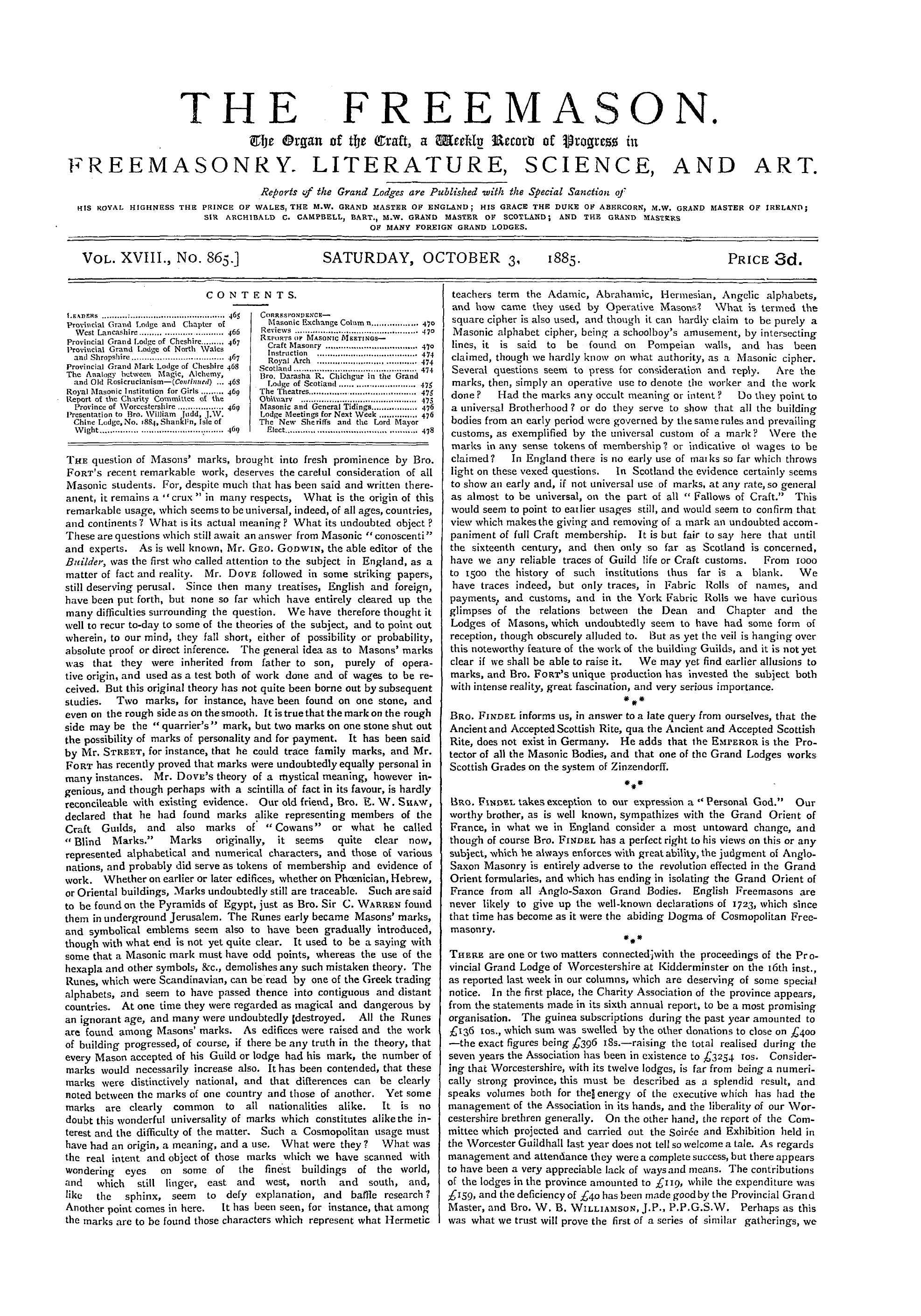
THE question of Masons marks , brought into fresh prominence by Bro . FORT ' S recent remarkable work , deserves the carelul consideration of all Masonic students . For , despite much that has been said and written thereanent , it remains a " crux " in many respects , What is the origin of this remarkable usage , which seems to be universal , indeed , of all ages , countries ,
and continents ? What is its actual meaning ? What its undoubted object ? These are questions which still await an answer from Masonic " conoscenti " and experts . As is well known , Mr . GEO . GODWIN , the able editor of the Builder , was the first who called attention to the subject in England , as a matter of fact and reality . Mr . DOVE followed in some striking papers ,
still deserving perusal . Since then many treatises , English and foreign , have been put forth , but none so far which have entirely cleared up the many difficulties surrounding the question . We have therefore thought it well to recur to-day to some of the theories of the subject , and to point out wherein , to our mind , they fall short , either of possibility or probability ,
absolute proof or direct inference . The general idea as to Masons' marks was that they were inherited from father to son , purely of operative origin , and used as a test both of work done and of wages to be received . But this original theory has not quite been borne out by subsequent studies . Two marks , for instance , have been found on one stone , and
even on the rough side as on the smooth . It is true that the mark on the rough side may be the " quarrier ' s " mark , but two marks on one stone shut out the possibility of marks of personality and for payment . It has been said by Mr . STREET , for instance , that he could trace family marks , and Mr . FORT has recently proved that marks were undoubtedly equally personal in
many instances . Mr . DOVE ' S theory of a mystical meaning , however ingenious , and though perhaps with a scintilla of fact in its favour , is hardly reconcileable with existing evidence . Our old friend , Bro . E . W . SKAW , declared that he had found marks alike representing members of the Craft Guilds , and also marks of "Cowans" or what he called
" Blind Marks . " Marks originally , it seems quite clear now , represented alphabetical and numerical characters , and those of various nations , and probably did serve as tokens of membership and evidence of work . Whether on earlier or later edifices , whether on Phoenician , Hebrew , or Oriental buildings , Marks undoubtedly still are traceable . Such are said
to be found on the Pyramids of Egypt , just as Bro . Sir C . WARREN found them in underground Jerusalem . The Runes early became Masons' marks , and symbolical emblems seem also to have been gradually introduced , though with what end is not yet quite clear . It used to be a saying with some that a Masonic mark must have odd points , whereas the use of the
hexapla and other symbols , & c , demolishes any such mistaken theory . The Runes , which were Scandinavian , can be read by one of the Greek trading alphabets , and seem to have passed thence into contiguous and distant countries . At one time they were regarded as magical and dangerous by an ignorant age , and many were undoubtedly [ destroyed . All the Runes
are found among Masons' marks . As edifices were raised and the work of building progressed , of course , if there be any truth in the theory , that every Mason accepted of his Guild or lodge had his mark , the number of marks would necessarily increase also . It has been contended , that these marks were distinctively national , and that differences can be clearly
noted between the marks of one country and those of another . Yet some marks are clearly common to all nationalities alike . It is no doubt this wonderful universality of marks which constitutes alike the interest and the difficulty of the matter . Such a Cosmopolitan usage must have had an origin , a meaning , and a use . What were they ? What was
the real intent and object of those marks which we have scanned with wondering eyes on some of the finest buildings of the world , and which still linger , east and west , north and south , and , like the sphinx , seem to defy explanation , and baffle research ? Another point comes in here . It has been seen , for instance , that among the marks are to be found those characters which represent what Hermetic
Ar00102
teachers term the Adamic , Abrahamic , Hermesian , Angelic alphabets , and how came they used by Operative Masons' ? What is termed the square cipher is also used , and though it can hardly claim to be purely a Masonic alphabet cipher , being a schoolboy ' s amusement , by intersecting lines , it is said to be found on Pompeian walls , and has been
claimed , though we hardly know on what authority , as a Masonic cipher . Several questions seem to press for consideration and reply . Are the marks , then , simply an operative use to denote the worker and the work done ? Had the marks any occult meaning or intent ? Do they point to a universal Brotherhood ? or do they serve to show that all the building
bodies from an early period were governed by the same rules and prevailing customs , as exemplified by the universal custom of a mark ? Were the marks in any sense tokens of membership ? or indicative ol wages to be claimed ? In England there is no early use of tnaiks so far which throws light on these vexed questions . In Scotland the evidence certainly seems
to show au early and , if not universal use of marks , at any rate , so general as almost to be universal , on the part of all " Fallows of Craft . " This would seem to point to eatlier usages still , and would seem to confirm that view which makes the giving and removing of a mark an undoubted accompaniment of full Craft membership . It is but fair to say here that until
the sixteenth century , and then only so far as Scotland is concerned , have we any reliable traces of Guild life or Craft customs . From 1000 to 1500 the history of such institutions thus far is a blank . We have traces indeed , but only traces , in Fabric Rolls of names , and payments , and customs , and in the York Fabric Rolls we have curious
glimpses of the relations between the Dean and Chapter and the Lodges of Masons , which undoubtedly seem to have had some form of reception , though obscurely alluded to . But as yet the veil is hanging over
this noteworthy feature of the work of the building Guilds , and it is not yet clear if we shall be able to raise it . We may yet find earlier allusions to marks , and Bro . FORT ' S unique production has invested the subject both with intense reality , great fascination , and very serious importance .
* # * BRO . FINDEL informs us , in answer to a late query from ourselves , that the Ancient and Accepted Scottish Rite , qua the Ancient and Accepted Scottish Rite , does not exist in Germany . He adds that the EMPEROR is the Protector of all the Masonic Bodies , and that one of the Grand Lodges works Scottish Grades on the system of Zinzendorff .
* # * BRO . FINDEL takes exception to our expression a " Personal God . " Our worthy brother , as is well known , sympathizes with the Grand Orient of France , in what we in England consider a most untoward change , and though of course Bro . FINDEL has a perfect right to his views on this or any
subject , which he always enforces with great ability , the judgment of Anglo-Saxon Masonry is entirely adverse to the revolution effected in the Grand Orient formularies , and which has ending in isolating the Grand Orient of France from all Anglo-Saxon Grand Bodies . English Freemasons are never likely to give up the well-known declarations of 1723 , which since that time has become as it were the abiding Dogma of Cosmopolitan
Freemasonry . * # * THERE are one or two matters connectedjwith the proceedings of the Provincial Grand Lodge of Worcestershire at Kidderminster on the 16 th inst ., as reported last week in our columns , which are deserving of some special
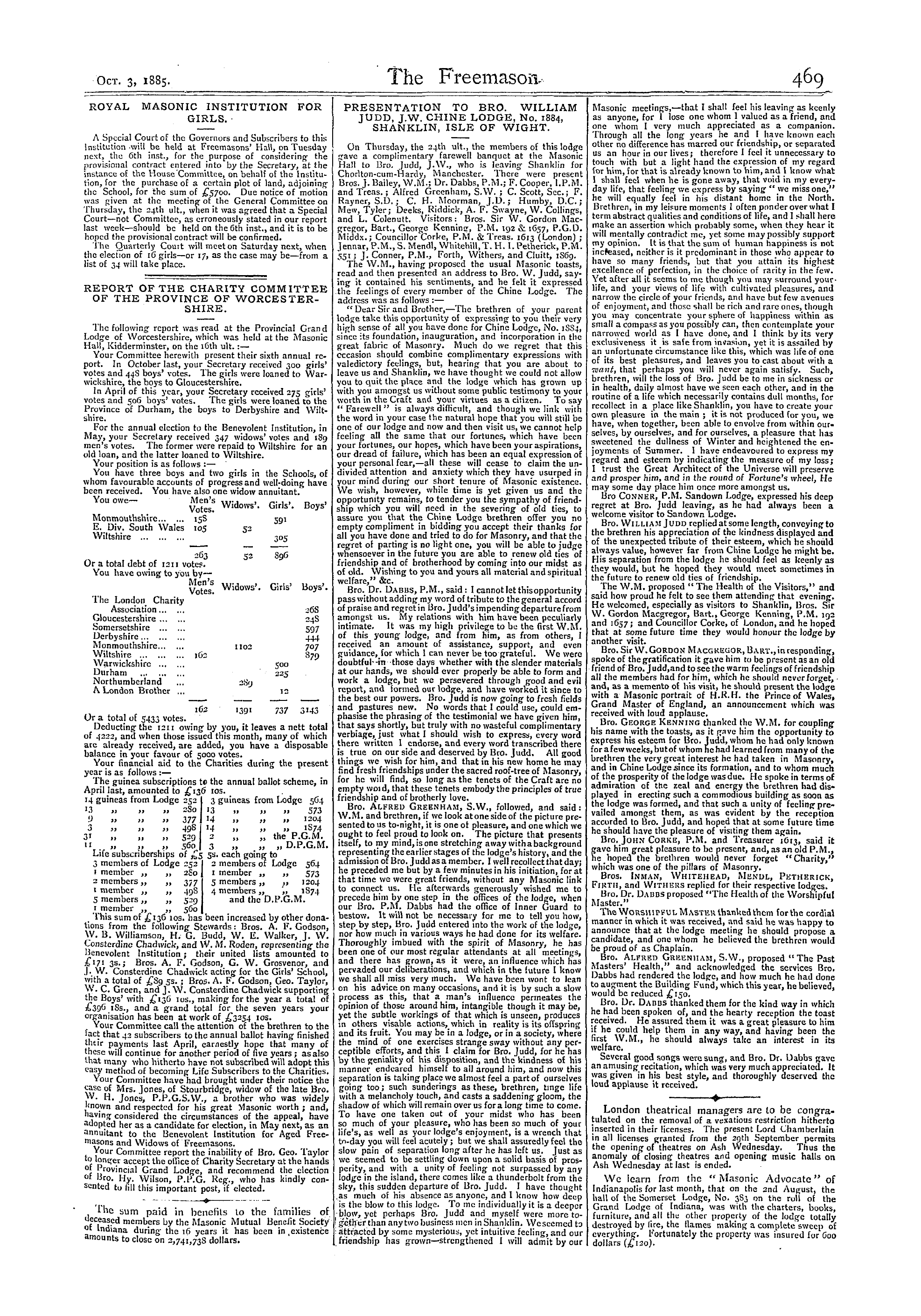
notice . In the first place , the Charity Association of the province appears , from the statements made in its sixth annual report , to be a most promising organisation . The guinea subscriptions during the past year amounted to £ 136 ios ., which sum was swelled by the other donations to close on £ 400
—the exact figures being £ 396 18 s . —raising the total realised during the seven years the Association has been in existence to £ 3254 10 s . Considering that Worcestershire , with its twelve lodges , is far from being a numerically strong province , this must be described as a splendid result , and speaks volumes both for the ! energy of the executive which has had the
management of the Association in its hands , and the liberality of our Worcestershire brethren generally . On the other hand , the report of the Committee which projected and carried out the Soiree and Exhibition held in the Worcester Guildhall last year does not tell so welcome a tale . As regards management and attendance they were a complete success , but there appears
to have been a very appreciable lack of ways and means . The contributions of the lodges in the province amounted to £ iv ) , while the expenditure was ^ 159 , and the deficiency of £ 40 has been made good by the Provincial Gran d Master , and Bro . W . B . WILLIAMSON , J . P ., P . P . G . S . W . Perhaps as this was what we trust will prove the first of a series of similar gatherings , we
Note: This text has been automatically extracted via Optical Character Recognition (OCR) software.
Contents.
CONTENTS .
LEADERS : 465 Provincial Grand Lodge and Chapter oE West Lancashire 466 Provincial Grand Lodge of Cheshire 467 Provincial Grand Lodge o £ North Wales ancl Shropshire j . 67
Provincial Grand Mark Lodge of Cheshire 46 S The Analogy between Magic , Alchemy , and Old Rosicrucianism—( Continued ) ... 468 Royal Masonic Institution for Girls 469 Report ot thc Charity Committee ot the Province of Worcestershire 460 Presentation to Bro . William Judd , J . W . Chine Lodge , No . 1884 , ShanicPn , Is ' le of Wight 4 < 59
CORRESPONDENCEMasonic Exchange Colum n 450 Reviews 470 REPORTS OF MASONIC MEETINGSCraft Masonry 470 Instruction 474 Royal Arch 474 Scotland ... .. ... . ... . .. .. . An .
Bro . Darasha R . Chichgur in the Grand Lodge of Scotland 475 The Theatres 47 ; Obvtaaiv 475 Masonic and General Tidings 476 Lodge Meetings for Next Week 476 The New Sheriffs and the Lord Mayor Elect 478
Ar00101
THE question of Masons marks , brought into fresh prominence by Bro . FORT ' S recent remarkable work , deserves the carelul consideration of all Masonic students . For , despite much that has been said and written thereanent , it remains a " crux " in many respects , What is the origin of this remarkable usage , which seems to be universal , indeed , of all ages , countries ,
and continents ? What is its actual meaning ? What its undoubted object ? These are questions which still await an answer from Masonic " conoscenti " and experts . As is well known , Mr . GEO . GODWIN , the able editor of the Builder , was the first who called attention to the subject in England , as a matter of fact and reality . Mr . DOVE followed in some striking papers ,
still deserving perusal . Since then many treatises , English and foreign , have been put forth , but none so far which have entirely cleared up the many difficulties surrounding the question . We have therefore thought it well to recur to-day to some of the theories of the subject , and to point out wherein , to our mind , they fall short , either of possibility or probability ,
absolute proof or direct inference . The general idea as to Masons' marks was that they were inherited from father to son , purely of operative origin , and used as a test both of work done and of wages to be received . But this original theory has not quite been borne out by subsequent studies . Two marks , for instance , have been found on one stone , and
even on the rough side as on the smooth . It is true that the mark on the rough side may be the " quarrier ' s " mark , but two marks on one stone shut out the possibility of marks of personality and for payment . It has been said by Mr . STREET , for instance , that he could trace family marks , and Mr . FORT has recently proved that marks were undoubtedly equally personal in
many instances . Mr . DOVE ' S theory of a mystical meaning , however ingenious , and though perhaps with a scintilla of fact in its favour , is hardly reconcileable with existing evidence . Our old friend , Bro . E . W . SKAW , declared that he had found marks alike representing members of the Craft Guilds , and also marks of "Cowans" or what he called
" Blind Marks . " Marks originally , it seems quite clear now , represented alphabetical and numerical characters , and those of various nations , and probably did serve as tokens of membership and evidence of work . Whether on earlier or later edifices , whether on Phoenician , Hebrew , or Oriental buildings , Marks undoubtedly still are traceable . Such are said
to be found on the Pyramids of Egypt , just as Bro . Sir C . WARREN found them in underground Jerusalem . The Runes early became Masons' marks , and symbolical emblems seem also to have been gradually introduced , though with what end is not yet quite clear . It used to be a saying with some that a Masonic mark must have odd points , whereas the use of the
hexapla and other symbols , & c , demolishes any such mistaken theory . The Runes , which were Scandinavian , can be read by one of the Greek trading alphabets , and seem to have passed thence into contiguous and distant countries . At one time they were regarded as magical and dangerous by an ignorant age , and many were undoubtedly [ destroyed . All the Runes
are found among Masons' marks . As edifices were raised and the work of building progressed , of course , if there be any truth in the theory , that every Mason accepted of his Guild or lodge had his mark , the number of marks would necessarily increase also . It has been contended , that these marks were distinctively national , and that differences can be clearly
noted between the marks of one country and those of another . Yet some marks are clearly common to all nationalities alike . It is no doubt this wonderful universality of marks which constitutes alike the interest and the difficulty of the matter . Such a Cosmopolitan usage must have had an origin , a meaning , and a use . What were they ? What was
the real intent and object of those marks which we have scanned with wondering eyes on some of the finest buildings of the world , and which still linger , east and west , north and south , and , like the sphinx , seem to defy explanation , and baffle research ? Another point comes in here . It has been seen , for instance , that among the marks are to be found those characters which represent what Hermetic
Ar00102
teachers term the Adamic , Abrahamic , Hermesian , Angelic alphabets , and how came they used by Operative Masons' ? What is termed the square cipher is also used , and though it can hardly claim to be purely a Masonic alphabet cipher , being a schoolboy ' s amusement , by intersecting lines , it is said to be found on Pompeian walls , and has been
claimed , though we hardly know on what authority , as a Masonic cipher . Several questions seem to press for consideration and reply . Are the marks , then , simply an operative use to denote the worker and the work done ? Had the marks any occult meaning or intent ? Do they point to a universal Brotherhood ? or do they serve to show that all the building
bodies from an early period were governed by the same rules and prevailing customs , as exemplified by the universal custom of a mark ? Were the marks in any sense tokens of membership ? or indicative ol wages to be claimed ? In England there is no early use of tnaiks so far which throws light on these vexed questions . In Scotland the evidence certainly seems
to show au early and , if not universal use of marks , at any rate , so general as almost to be universal , on the part of all " Fallows of Craft . " This would seem to point to eatlier usages still , and would seem to confirm that view which makes the giving and removing of a mark an undoubted accompaniment of full Craft membership . It is but fair to say here that until
the sixteenth century , and then only so far as Scotland is concerned , have we any reliable traces of Guild life or Craft customs . From 1000 to 1500 the history of such institutions thus far is a blank . We have traces indeed , but only traces , in Fabric Rolls of names , and payments , and customs , and in the York Fabric Rolls we have curious
glimpses of the relations between the Dean and Chapter and the Lodges of Masons , which undoubtedly seem to have had some form of reception , though obscurely alluded to . But as yet the veil is hanging over
this noteworthy feature of the work of the building Guilds , and it is not yet clear if we shall be able to raise it . We may yet find earlier allusions to marks , and Bro . FORT ' S unique production has invested the subject both with intense reality , great fascination , and very serious importance .
* # * BRO . FINDEL informs us , in answer to a late query from ourselves , that the Ancient and Accepted Scottish Rite , qua the Ancient and Accepted Scottish Rite , does not exist in Germany . He adds that the EMPEROR is the Protector of all the Masonic Bodies , and that one of the Grand Lodges works Scottish Grades on the system of Zinzendorff .
* # * BRO . FINDEL takes exception to our expression a " Personal God . " Our worthy brother , as is well known , sympathizes with the Grand Orient of France , in what we in England consider a most untoward change , and though of course Bro . FINDEL has a perfect right to his views on this or any
subject , which he always enforces with great ability , the judgment of Anglo-Saxon Masonry is entirely adverse to the revolution effected in the Grand Orient formularies , and which has ending in isolating the Grand Orient of France from all Anglo-Saxon Grand Bodies . English Freemasons are never likely to give up the well-known declarations of 1723 , which since that time has become as it were the abiding Dogma of Cosmopolitan
Freemasonry . * # * THERE are one or two matters connectedjwith the proceedings of the Provincial Grand Lodge of Worcestershire at Kidderminster on the 16 th inst ., as reported last week in our columns , which are deserving of some special
notice . In the first place , the Charity Association of the province appears , from the statements made in its sixth annual report , to be a most promising organisation . The guinea subscriptions during the past year amounted to £ 136 ios ., which sum was swelled by the other donations to close on £ 400
—the exact figures being £ 396 18 s . —raising the total realised during the seven years the Association has been in existence to £ 3254 10 s . Considering that Worcestershire , with its twelve lodges , is far from being a numerically strong province , this must be described as a splendid result , and speaks volumes both for the ! energy of the executive which has had the
management of the Association in its hands , and the liberality of our Worcestershire brethren generally . On the other hand , the report of the Committee which projected and carried out the Soiree and Exhibition held in the Worcester Guildhall last year does not tell so welcome a tale . As regards management and attendance they were a complete success , but there appears
to have been a very appreciable lack of ways and means . The contributions of the lodges in the province amounted to £ iv ) , while the expenditure was ^ 159 , and the deficiency of £ 40 has been made good by the Provincial Gran d Master , and Bro . W . B . WILLIAMSON , J . P ., P . P . G . S . W . Perhaps as this was what we trust will prove the first of a series of similar gatherings , we