-
Articles/Ads
Article PROFIT AND PLEASURE. Page 1 of 1 Article THE PRESS AND FREEMASONRY. Page 1 of 1 Article CATHOLIC OPPOSITION TO FREEMASONRY. Page 1 of 2 →
Note: This text has been automatically extracted via Optical Character Recognition (OCR) software.
Profit And Pleasure.
PROFIT AND PLEASURE .
ONE noteworthy feature in connection with Freemasonry is that all its work is conducted with a view" of affording both profit and pleasure to those who participate in it , and no doubt this fact alone has very much to do with the success that usually attends the efforts of our Lodge leaders in any
•work they may undertake in furtherance of the cause of Freemasonry . It is no unusual thing to hear a speaker say that a good Mason must of necessity be a good man—this may almost be
regarded as a natural sequence of events , the principal reason being that in all the lessons of the Graft profit and pleasure is aimed at , profit of an intellectual and moral character , be it understood , rather than that financial benefit
that is usually identified with the use of the term . In all its work Freemasonry seeks to benefit its pupils by symbolical teaching , but the lessons are not of the hard , dry character
of many that have to be learnt in the course of one ' s career through this world , all being framed so as to provide not only instruction , but also enjoyment—profit and pleasure , in fact . -
We find this feature of Freemasonry strongly exemplified about this season of the year , when Brethren in various parts of the country arrange balls and other entertainments , at which departure from the ordinary routine of Lodge work is
possible , and the opportunity arises of instructing outsiders in some of the features of Freemasonry , at the same time giving them the opportunity of enjoying themselves during the
process . Very much that is good follows in the wake of these meetings , and we think there are few who will argue they do any harm , or are in any way out of place as a part of the Masonic work of the age .
We have lately spoken of endeavours made in this direction by Brethren who have associated the name of Freemasonry with efforts on behalf of the aged and distressed in their midst , and as we then said instances of such kindly work are
by no means rare ; while there is the equally gratifying consideration that they are being imitated by Brethren who recognise that pleasure may be derived in causing the enjoyment of others . We appear to have by no means
overrated the tendency of the Craft in this direction , for wherever we turn we find records of such entertainments , or of parties arranged for the enjoyment of the wives or children of the Craft , who , we are convinced , must derive some benefit
from their association -with the Order , brief though it may be . In our present issue we briefly record some of these gatherings , but there are many others that have come under our notice , for which we have no space , although we fully recognise that
all are deserving of being recorded , not only out of compliment to the Brethren who arrange them , but also because of their bearing on the subject of our present remarks , and their ultimate result on the Craft , by proving to the world the benefits of its teachings .
The Press And Freemasonry.
THE PRESS AND FREEMASONRY .
THE opening of the banquet to strangers reminds me of the first and only " strike of reporters " in which I had a part . It occurred many years ago , before the present Marquis of Ripon threw over Freemasonry and the Church of England , and was received into the Church of Borne , the latter Church tabooing the Masons . The occasion was the laying of the foundation
stone of Thornton Church , with Masonic honours , by the Marquis , followed by a banquet at St . George ' s Hall . About thirty reporters were present , mostly from distant places , Bradford being then much smaller than it is in the present day . The ceremony at the stone-laying passed off satisfactorily , and all went well up to that point .
The reporters -were then informed that dinner would be provided for them in a room at St . George ' s Hall , Bradford , and that they would be called into the Masonic banquet when they were required . There was less competition in the press in those days than there is now . I am also bound to say that there was
more independence amongst pressmen , who stood firmly on the dignity of the profession . A meeting was held after the ceremony at the stone , and it was resolved not to attend the banquet on the conditions proposed by the Masons . Every pressman—and there were several from Manchester and other district towns" cut" the banquet , and returned from whence they came .
The Masons were very independent . They could not conceive that the pressmen dare " strike " against their imperious order . When they found that not a solitary pressman turned up at the little dinner set out in a private room at St . George ' s Hall , they realised their position . There were hurryings to and fro in
search of a scribe , but none could be found willing to break through the compact . There were no daily papers in Bradford in those days . No mention of the banquet was made in any of the dalies next morning , and the carefully-prepared speech of
Lord Bipon was confined to the Brethren . An amateur report was sent to an organ of the Craft , but nothing else was heard of the banquet , and the " gentlemen of the fourth estate " taught the Masons a lesson !
[ The above paragraphs are sent us from the " Bacup Times , " of last May , our correspondent suggesting they have not lost their interest by the lapse of time since their apperance . It
is true matters have very much changed since the days to which the writer refers , but even now some of our Brother Masons have some very peculiar ideas as to the position of the press in regard to Freemasonry . —Ed . F . C . I
Catholic Opposition To Freemasonry.
CATHOLIC OPPOSITION TO FREEMASONRY .
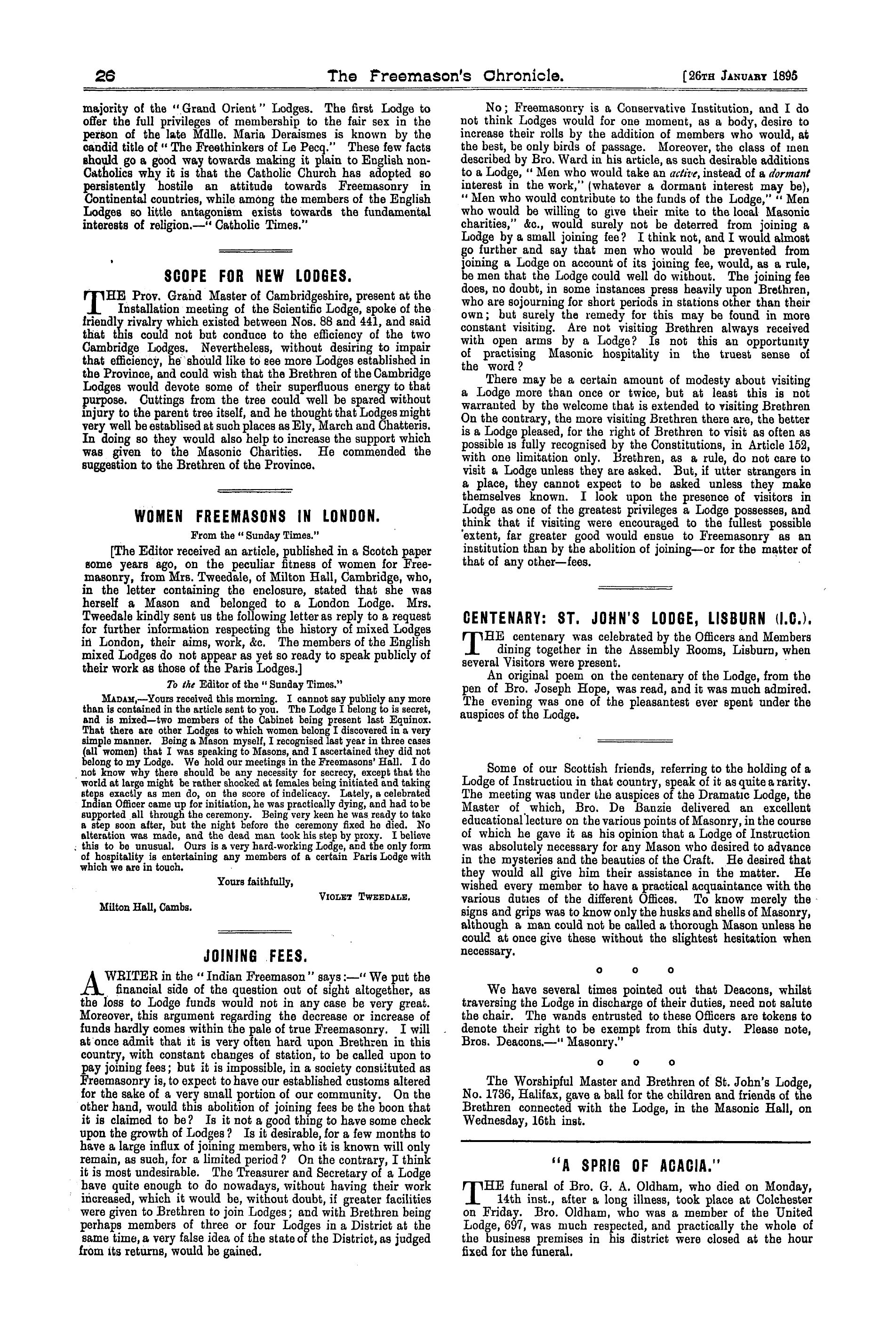
IN connection with the subject of Women Freemasons , to which we referred in a recent issue , and regarding the existence of whom all pretence of secrecy has been abandoned by the Masonic authorities , some curious details have been
furnished by a certain Dr . George Martin , chief of the mixed Lodge of Freemasonry in Paris , concerning the various oaths in use amongst the Masonic Brotherhood . It would appear from Dr . Martin ' s statement to an interviewer that whereas the usual
oath of a Freemason is by " The Great Architect of the Universe , " meaning thereby the Almighty , and that this belief in a Supreme Being is accepted , more especially in England and America , as a fundamental clause in the constitution of the Masonic Lodges , in France the " Grand Orient" Lodges , distinguished both by
their numbers and their importance , refuse to commit themselves to any recognition of a divine Power , as being an unwarrantable interference with liberty of conscience , and content themselves with swearing by their own constitutions . This solution of a difficult problem has been accepted as satisfactory by both Theists and Atheists , who , it need hardl y be added , compose- the


Note: This text has been automatically extracted via Optical Character Recognition (OCR) software.
Profit And Pleasure.
PROFIT AND PLEASURE .
ONE noteworthy feature in connection with Freemasonry is that all its work is conducted with a view" of affording both profit and pleasure to those who participate in it , and no doubt this fact alone has very much to do with the success that usually attends the efforts of our Lodge leaders in any
•work they may undertake in furtherance of the cause of Freemasonry . It is no unusual thing to hear a speaker say that a good Mason must of necessity be a good man—this may almost be
regarded as a natural sequence of events , the principal reason being that in all the lessons of the Graft profit and pleasure is aimed at , profit of an intellectual and moral character , be it understood , rather than that financial benefit
that is usually identified with the use of the term . In all its work Freemasonry seeks to benefit its pupils by symbolical teaching , but the lessons are not of the hard , dry character
of many that have to be learnt in the course of one ' s career through this world , all being framed so as to provide not only instruction , but also enjoyment—profit and pleasure , in fact . -
We find this feature of Freemasonry strongly exemplified about this season of the year , when Brethren in various parts of the country arrange balls and other entertainments , at which departure from the ordinary routine of Lodge work is
possible , and the opportunity arises of instructing outsiders in some of the features of Freemasonry , at the same time giving them the opportunity of enjoying themselves during the
process . Very much that is good follows in the wake of these meetings , and we think there are few who will argue they do any harm , or are in any way out of place as a part of the Masonic work of the age .
We have lately spoken of endeavours made in this direction by Brethren who have associated the name of Freemasonry with efforts on behalf of the aged and distressed in their midst , and as we then said instances of such kindly work are
by no means rare ; while there is the equally gratifying consideration that they are being imitated by Brethren who recognise that pleasure may be derived in causing the enjoyment of others . We appear to have by no means
overrated the tendency of the Craft in this direction , for wherever we turn we find records of such entertainments , or of parties arranged for the enjoyment of the wives or children of the Craft , who , we are convinced , must derive some benefit
from their association -with the Order , brief though it may be . In our present issue we briefly record some of these gatherings , but there are many others that have come under our notice , for which we have no space , although we fully recognise that
all are deserving of being recorded , not only out of compliment to the Brethren who arrange them , but also because of their bearing on the subject of our present remarks , and their ultimate result on the Craft , by proving to the world the benefits of its teachings .
The Press And Freemasonry.
THE PRESS AND FREEMASONRY .
THE opening of the banquet to strangers reminds me of the first and only " strike of reporters " in which I had a part . It occurred many years ago , before the present Marquis of Ripon threw over Freemasonry and the Church of England , and was received into the Church of Borne , the latter Church tabooing the Masons . The occasion was the laying of the foundation
stone of Thornton Church , with Masonic honours , by the Marquis , followed by a banquet at St . George ' s Hall . About thirty reporters were present , mostly from distant places , Bradford being then much smaller than it is in the present day . The ceremony at the stone-laying passed off satisfactorily , and all went well up to that point .
The reporters -were then informed that dinner would be provided for them in a room at St . George ' s Hall , Bradford , and that they would be called into the Masonic banquet when they were required . There was less competition in the press in those days than there is now . I am also bound to say that there was
more independence amongst pressmen , who stood firmly on the dignity of the profession . A meeting was held after the ceremony at the stone , and it was resolved not to attend the banquet on the conditions proposed by the Masons . Every pressman—and there were several from Manchester and other district towns" cut" the banquet , and returned from whence they came .
The Masons were very independent . They could not conceive that the pressmen dare " strike " against their imperious order . When they found that not a solitary pressman turned up at the little dinner set out in a private room at St . George ' s Hall , they realised their position . There were hurryings to and fro in
search of a scribe , but none could be found willing to break through the compact . There were no daily papers in Bradford in those days . No mention of the banquet was made in any of the dalies next morning , and the carefully-prepared speech of
Lord Bipon was confined to the Brethren . An amateur report was sent to an organ of the Craft , but nothing else was heard of the banquet , and the " gentlemen of the fourth estate " taught the Masons a lesson !
[ The above paragraphs are sent us from the " Bacup Times , " of last May , our correspondent suggesting they have not lost their interest by the lapse of time since their apperance . It
is true matters have very much changed since the days to which the writer refers , but even now some of our Brother Masons have some very peculiar ideas as to the position of the press in regard to Freemasonry . —Ed . F . C . I
Catholic Opposition To Freemasonry.
CATHOLIC OPPOSITION TO FREEMASONRY .
IN connection with the subject of Women Freemasons , to which we referred in a recent issue , and regarding the existence of whom all pretence of secrecy has been abandoned by the Masonic authorities , some curious details have been
furnished by a certain Dr . George Martin , chief of the mixed Lodge of Freemasonry in Paris , concerning the various oaths in use amongst the Masonic Brotherhood . It would appear from Dr . Martin ' s statement to an interviewer that whereas the usual
oath of a Freemason is by " The Great Architect of the Universe , " meaning thereby the Almighty , and that this belief in a Supreme Being is accepted , more especially in England and America , as a fundamental clause in the constitution of the Masonic Lodges , in France the " Grand Orient" Lodges , distinguished both by
their numbers and their importance , refuse to commit themselves to any recognition of a divine Power , as being an unwarrantable interference with liberty of conscience , and content themselves with swearing by their own constitutions . This solution of a difficult problem has been accepted as satisfactory by both Theists and Atheists , who , it need hardl y be added , compose- the