-
Articles/Ads
Article MASONRY AT THE BANQUET TABLE. Page 1 of 2 Article MASONRY AT THE BANQUET TABLE. Page 1 of 2 →
Note: This text has been automatically extracted via Optical Character Recognition (OCR) software.
Masonry At The Banquet Table.
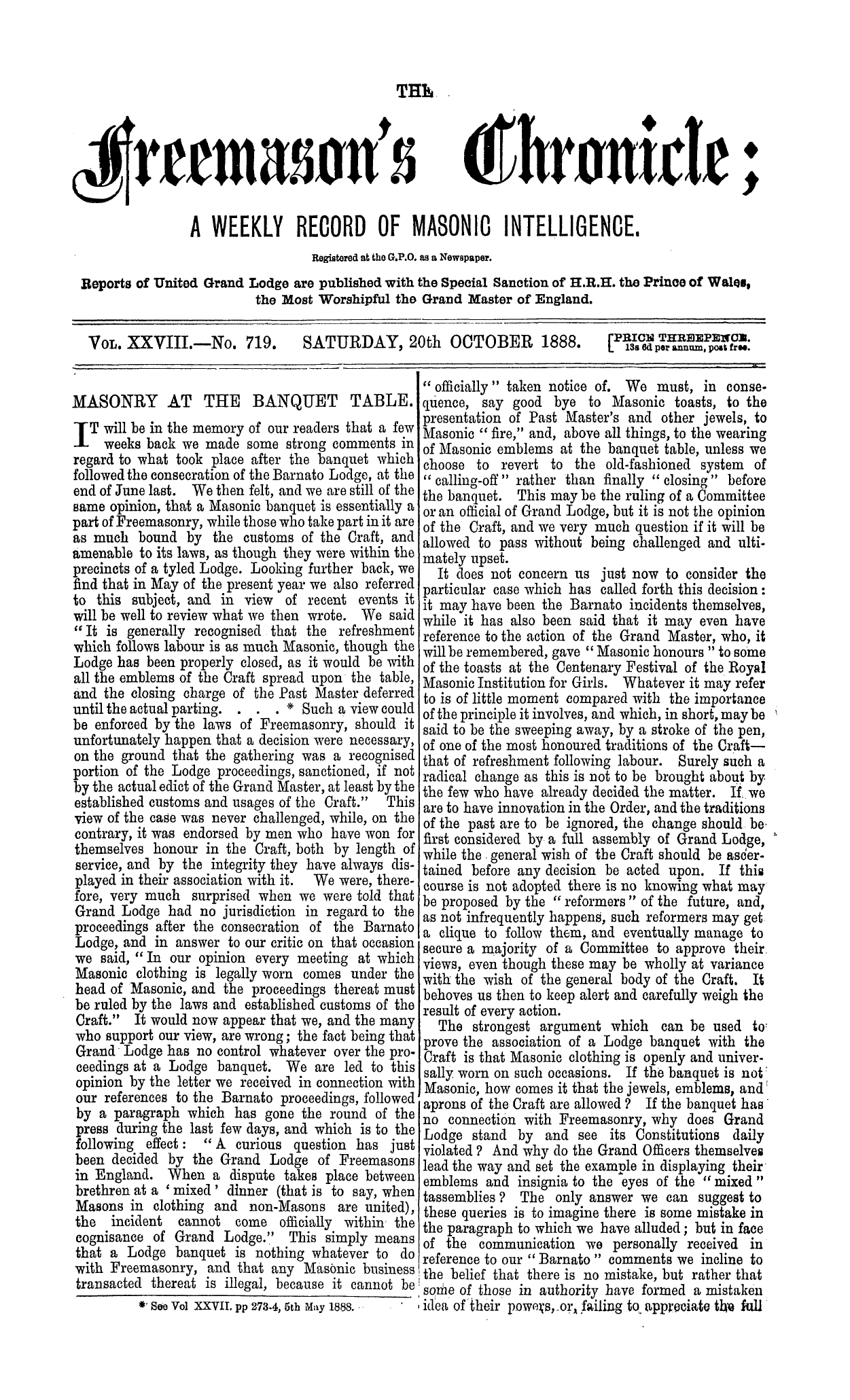
MASONRY AT THE BANQUET TABLE .
IT will be in the memory of our readers that a few weeks back we made some strong comments in regard to what took place after the banquet which followed the consecration of the Barnato Lodge , at the end of June last . We then felt , and we are still of the tnat masonic is
same opinion , a Banquet essentially a part of Freemasonry , while those who take part in it are as much bound by the customs of the Craft , and amenable to its laws , as though they were within the precincts of a tyled Lodge . Looking further back , we find that in May of the present year we also referred
to this subject , and m view of recent events it will be well to review what we then wrote . We said " It is generally recognised that the refreshment which follows labour is as much Masonic , though the Lodge has been properly closed , as it would be with all the emblems of the Craft spread upon the table ,
and the closing charge ol the . Past Master deterred until the actual parting . . . . * Such a view could be enforced by the laws of Freemasonry , should it unfortunately happen that a decision were necessary , on the ground that the gathering was a recognised portion of the Lodge proceedings , sanctioned , if not
by the actual edict ol the Grand Master , at least by the established customs and usages of the Craft . " This view of the case was never challenged , while , on the contrary , it was endorsed by men who have won for themselves honour in the Craft , both by length of service , and by the integrity they have always
displayed in their association with it . We were , therefore , very much surprised when we were told that Grand Lodge had no jurisdiction in regard to the proceedings after the consecration of the Barnato Lodge , and in answer to our critic on that occasion
we said , In our opinion every meeting at which Masonic clothing is legally worn comes under the head of Masonic , and the proceedings thereat must be ruled by the laws and established customs of the Craft . " It would now appear that we , and the many
who support our view , are wrong ; the fact being that Grand Lodge has no control whatever over the proceedings at a Lodge banquet . We are led to this opinion by the letter we received in connection with our references to the Barnato proceedings , followed
by a paragraph which has gone the round of the press during the last few days , and which is to the following effect : "A curious question has just been decided by the Grand Lodge of Freemasons in England . When a dispute takes place between brethren at a ' mixed ' dinner ( that is to say , when Masons in clothing and non-Masons are united ) , the incident cannot come officially within the cognisance of Grand Lodge . " This simply means that a Lodge banquet is nothing whatever to do with Freemasonry , and that any Masonic business transacted thereat is illegal , because it cannot be
Masonry At The Banquet Table.
" officially" taken notice of . We must , in consequence , say good bye to Masonic toasts , to the presentation of Past Master ' s and other jewels , to Masonic " fire , " and , above all things , to the wearing of Masonic emblems at the banquet table , unless we choose to revert to the old-fashioned system of
" calling-off" rather than finally " closing " before the banquet . This may be the ruling of a Committee or an official of Grand Lodge , but it is not the opinion of the Craft , and we very much question if it will be allowed to pass without being challenged and ultimately upset .
It does not concern us just now to consider the particular case which has called forth this decision : it may have been the Barnato incidents themselves , while it has also been said that it may even have reference to the action of the Grand Master , who , it •ill t - \ e e TL T * 1 i * i win rememoered masonic to
oe , gave nonours some of the toasts at the Centenary Festival of the Eoyal Masonic Institution for Girls . Whatever it may refer to is of little moment compared with the importance of the principle it involves , and which , in short , may be
said to be the sweeping away , by a stroke of the pen , of one of the most honoured traditions of the Craftthat of refreshment following labour . Surely such a radical change as this is not to be brought about by
the few who have already decided the matter . If . we are to have innovation in the Order , and the traditions of the past are to be ignored , the change should be
first considered by a lull assembly of Grand Lodge , while the general wish of the Craft should be ascertained before any decision be acted upon . If this course is not adopted there is no knowing what may be proposed by the " reformers " of the future , and , as not infrequently happens , such reformers may get n / ll-l /^ Ttrt 4- / -v fAHnTTf + I ^ / -. W-I nvirt nTTA « TnnllTT m n -n n r * r * + / - * \ inv i linensojiiu iiu
a . j [ uo ) U njiiuw , . cvcuuu . aiixj xuauoigc secure a majority of a Committee to approve their views , even though these may be wholly at variance with the wish of the general body of the Craft . It behoves us then to keep alert and carefully weigh the result of every action . wnicn used to
xne strongest argument can De prove the association of a Lodge banquet with the Craft is that Masonic clothing is openly and universally worn on such occasions . If the banquet is not MasomV ,. how comes it that the iewels . emblems , and /
7 " - ~ , ; -- •- - 1 aprons of the Craft are allowed ? If the banquet has no connection with Freemasonry , why does Grand Lodge stand by and see its Constitutions daily violated ? And why do the Grand Officers themselves
lead the way and set the example m displaying their emblems and insignia to the eyes of the " mixed " tassemblies ? The only answer we can suggest to these queries is to imagine there is some mistake in the paragraph to which we have alluded : but in face
of the communication we personally received in reference to our "Barnato " comments we incline to the belief that there is no mistake , but rather that some of those in authority have formed a mistaken idea of their powers , or , failing to , appreciate tiya full





Note: This text has been automatically extracted via Optical Character Recognition (OCR) software.
Masonry At The Banquet Table.
MASONRY AT THE BANQUET TABLE .
IT will be in the memory of our readers that a few weeks back we made some strong comments in regard to what took place after the banquet which followed the consecration of the Barnato Lodge , at the end of June last . We then felt , and we are still of the tnat masonic is
same opinion , a Banquet essentially a part of Freemasonry , while those who take part in it are as much bound by the customs of the Craft , and amenable to its laws , as though they were within the precincts of a tyled Lodge . Looking further back , we find that in May of the present year we also referred
to this subject , and m view of recent events it will be well to review what we then wrote . We said " It is generally recognised that the refreshment which follows labour is as much Masonic , though the Lodge has been properly closed , as it would be with all the emblems of the Craft spread upon the table ,
and the closing charge ol the . Past Master deterred until the actual parting . . . . * Such a view could be enforced by the laws of Freemasonry , should it unfortunately happen that a decision were necessary , on the ground that the gathering was a recognised portion of the Lodge proceedings , sanctioned , if not
by the actual edict ol the Grand Master , at least by the established customs and usages of the Craft . " This view of the case was never challenged , while , on the contrary , it was endorsed by men who have won for themselves honour in the Craft , both by length of service , and by the integrity they have always
displayed in their association with it . We were , therefore , very much surprised when we were told that Grand Lodge had no jurisdiction in regard to the proceedings after the consecration of the Barnato Lodge , and in answer to our critic on that occasion
we said , In our opinion every meeting at which Masonic clothing is legally worn comes under the head of Masonic , and the proceedings thereat must be ruled by the laws and established customs of the Craft . " It would now appear that we , and the many
who support our view , are wrong ; the fact being that Grand Lodge has no control whatever over the proceedings at a Lodge banquet . We are led to this opinion by the letter we received in connection with our references to the Barnato proceedings , followed
by a paragraph which has gone the round of the press during the last few days , and which is to the following effect : "A curious question has just been decided by the Grand Lodge of Freemasons in England . When a dispute takes place between brethren at a ' mixed ' dinner ( that is to say , when Masons in clothing and non-Masons are united ) , the incident cannot come officially within the cognisance of Grand Lodge . " This simply means that a Lodge banquet is nothing whatever to do with Freemasonry , and that any Masonic business transacted thereat is illegal , because it cannot be
Masonry At The Banquet Table.
" officially" taken notice of . We must , in consequence , say good bye to Masonic toasts , to the presentation of Past Master ' s and other jewels , to Masonic " fire , " and , above all things , to the wearing of Masonic emblems at the banquet table , unless we choose to revert to the old-fashioned system of
" calling-off" rather than finally " closing " before the banquet . This may be the ruling of a Committee or an official of Grand Lodge , but it is not the opinion of the Craft , and we very much question if it will be allowed to pass without being challenged and ultimately upset .
It does not concern us just now to consider the particular case which has called forth this decision : it may have been the Barnato incidents themselves , while it has also been said that it may even have reference to the action of the Grand Master , who , it •ill t - \ e e TL T * 1 i * i win rememoered masonic to
oe , gave nonours some of the toasts at the Centenary Festival of the Eoyal Masonic Institution for Girls . Whatever it may refer to is of little moment compared with the importance of the principle it involves , and which , in short , may be
said to be the sweeping away , by a stroke of the pen , of one of the most honoured traditions of the Craftthat of refreshment following labour . Surely such a radical change as this is not to be brought about by
the few who have already decided the matter . If . we are to have innovation in the Order , and the traditions of the past are to be ignored , the change should be
first considered by a lull assembly of Grand Lodge , while the general wish of the Craft should be ascertained before any decision be acted upon . If this course is not adopted there is no knowing what may be proposed by the " reformers " of the future , and , as not infrequently happens , such reformers may get n / ll-l /^ Ttrt 4- / -v fAHnTTf + I ^ / -. W-I nvirt nTTA « TnnllTT m n -n n r * r * + / - * \ inv i linensojiiu iiu
a . j [ uo ) U njiiuw , . cvcuuu . aiixj xuauoigc secure a majority of a Committee to approve their views , even though these may be wholly at variance with the wish of the general body of the Craft . It behoves us then to keep alert and carefully weigh the result of every action . wnicn used to
xne strongest argument can De prove the association of a Lodge banquet with the Craft is that Masonic clothing is openly and universally worn on such occasions . If the banquet is not MasomV ,. how comes it that the iewels . emblems , and /
7 " - ~ , ; -- •- - 1 aprons of the Craft are allowed ? If the banquet has no connection with Freemasonry , why does Grand Lodge stand by and see its Constitutions daily violated ? And why do the Grand Officers themselves
lead the way and set the example m displaying their emblems and insignia to the eyes of the " mixed " tassemblies ? The only answer we can suggest to these queries is to imagine there is some mistake in the paragraph to which we have alluded : but in face
of the communication we personally received in reference to our "Barnato " comments we incline to the belief that there is no mistake , but rather that some of those in authority have formed a mistaken idea of their powers , or , failing to , appreciate tiya full