-
Articles/Ads
Article PROVINCIAL GRAND LODGE OF NORTH AND EAST YORKSHIRE. ← Page 2 of 2 Article PROVINCIAL GRAND LODGE OF NORFOLK. Page 1 of 1 Article ENGLISH SEVENTEENTH CENTURY FREEMASONRY—A STUDY. Page 1 of 1 Article ENGLISH SEVENTEENTH CENTURY FREEMASONRY—A STUDY. Page 1 of 1
Note: This text has been automatically extracted via Optical Character Recognition (OCR) software.
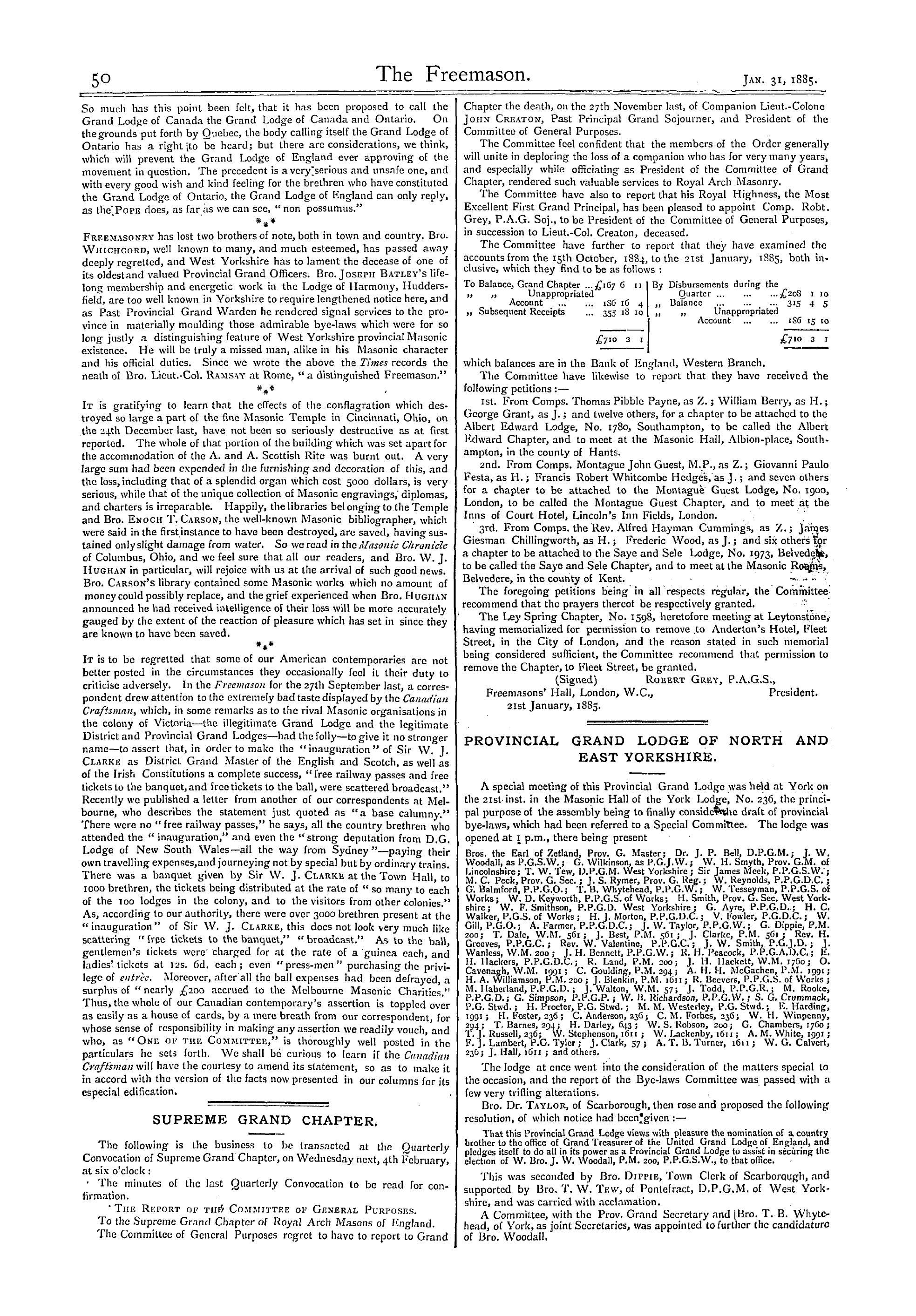
Provincial Grand Lodge Of North And East Yorkshire.
Bro . T . B . WHYTEHEAD , P . M ., then moved ( on behalf of Bro . J . S . Cumberland , P . M ., who was absent ) that a sum of 50 guineas be voted to each of the three Masonic Charities . This was seconded by Bro . J . S . RYMER , P . M ., and carried unanimously . There being no other business , Provincial Grand Lodge was then closed .
During the afternoon a clay model of the bust of Bro . Dr . J . P . Bell , of Hull , D . P . G . M ., and P . G . D . of England , the work of Bro . Keyworth , the sculptor , of Hull , was exhibited in the ante-room , and was much admired . We understand that Bro . Keyworth has permission to model a bust of the Prov . Grand Master , the Earl of Zetland .
Provincial Grand Lodge Of Norfolk.
PROVINCIAL GRAND LODGE OF NORFOLK .
The members of the Provincial Grand Lodge of Norfolk held their annual meeting at lhe Town HaU , Lynn , on Monday evening , under the presidency ofthe Right Hon . Lord Suffield , K . C . B ., the R . W . Provincial Grand Master . The brethren assembled at half-past four o ' clock , and an hour later they were joined by his Royal Highness the Prince of Wales , K . G ., M . W . Grand Master of England , who had driven from
Sandringham in a closed carriage . He was received at the entrance to the Town Hall by the special Stewards , namely , Bros . H . le Strange , Chief Steward , Sir R . J . Buxton , Sir F . G . M . Boileau , Lord Hastings , Sir W . H . B . Ffolkcs , Rev . C . J . Martyn , W . A . T . Amherst , C . T . M . Montgomerie , W . H . A . Keppel , and G . F . Buxlon , and conducted to his seat . The stone hall was specially furnished for the occasion , the floor being covered with crimson
cloth-At the ' close of the lodge business about 250 of the brethren attended the annual banquet , which was served in thc Assembly-room by Bro . S . N . Marshall , of the Globe Hotel . Bro . Lord Suffield , Provincial Grand Master , occupied the chair , and he was supported on his right by the Prince of Wales , Bros . Lord Hastings , H . le Strange , Prov . Grand Treas . ; Sir W . H . B . Ffolkes , and the Rev . C . J . Martyn , P . G . C . of . England . On his left were Bros . Major Penrice , D . Prov . G . M . ; C . T . M . Montgomerie , Sir F . G . M . Boileau , W . A . T . Amherst , and Sir R . J . Buxton .
After ; dinner the CHAIRMAN gave " The Queen and thc Craft" and " His Royal Highness the M . W . Grand Master the Prince of Wales . " who responded . The CHAIRMAN next gave "Thc M . W . Pro Grand Master , the Right Hon . the Earl of Carnarvon ; the R . W . Deputy G . M ., the Earl of Lathom ; and the Officers of the Grand Lodge of England , Present and Past . " ' The Rev . C . J . MARTYN responded .
The Prince of WALES then proposed " The R . W . Provincial Grand Master , the Right Hon . Lord Suffield , K . C . B ., " who replied , and then gave "The W . D . Prov . Grand Master , Major Penrice , P . G . D ., " who responded . Bro . Lord HASTINGS proposed "The Present and Past Officers of the Provincial Grand Lodge , " for whom Bro . E . BAMWELL , P . Prov . Senior Warden , replied .
Sir H . W . B . FFOLKES proposed "The Provincial Grand Treasurer , " which was acknowledged by Bro . H . LE STRANGE . " The W . M ., Officers , and Brethren of the Philanthropic Lodge" was given by Bro . Lord SUFFIELD , and replied to by the W . M ., Bro . thc Rev . J . B . SLIGHT , Prov . G . Chap .
The proceedings were carried out with the utmost cordiality , and a most pleasant evening was passed . At about 10 o ' clock the Prince of Wales returned to Sandringham , and most of the brethren who reside out of Lynn proceeded shortly afterwards to their homes by Great Eastern Railway and Eastern and Midland Railway special trains , and all the olher members had left the hall by 11 o'clock . During the evening several gas stars , crosses , & c , and some transparencies were displayed in various parts of the town .
English Seventeenth Century Freemasonry—A Study.
ENGLISH SEVENTEENTH CENTURY FREEMASONRY—A STUDY .
I he fact of an English seventeenth century I < reemasonry is now clearly before us , and must be a great factor in any future and reliable history of our Craft . But the question naturally supervenes at once—Where are its traces ? What was it ? What were its distinguishing features ? It is when we endeavour to answer such queries accurately that the Crux wc have to solve is alike apparent and hard . Up to date 1646 is our greatest landmark
in connection with English seventeenth century Freemasonry , when Ashmole was admitted into the lodge at Warrington . As a good deal turns upon the actual passage of the entry in his diary which records the event , let us endeavour to be accurate in his quotation of it . Thc entry , for some reason or other , has often been incorrectly rendered , and erroneous conclusions have been drawn from erratic premises .
Ashmole ' s own account is as follows , as collated with his own MS .: " 1646 , Oct . 16 . 4 . 30 p . m . I was made a-Freemason at Warrington , in Lancashire , with Coll Henry Mainwaring , of Kavincham , in Cheshire . The names of those that were then of the lodge ( were ) Mr . Rich . Penhet , Warden , Mr . James Collier , Mr . Rich . Sankey , Henry Littler , John Ellam , Rich . Ellam , and Hugh Brewer . ' '
We have here in 1646 the record of a Speculative Lodge of Freemasons , with a Warden , not a Master , presiding , and the greater part of the menv cers were " generosi , " with coats of arms , and no Operative Mason seems to have been present . This , then , introduces us to an entirely novel appearance of Freemasonry , different entirely from the Scottish system , and "sui
generis " in the middle of the seventeenth century . As Bro . Gould remarks , this lodge at Warrington had , we may well and fairly assume , an earlier existence , though , so far , no records have been found of it at all . If ever Ashmole ' s papers turn up , we may find something about its history before 16 46 .
English Seventeenth Century Freemasonry—A Study.
The earliest record of a lodge in England—we may well remember before we go on—is found in Molash's Register ( see " Kenning ' s Cyclop ; cdia " Molash ) , in the Tanner MSS . ( Bodleian Library , Oxford ) , where , according to Mr . Hackman , wc have the record of a lodge attached to Christ Church Priory , Canterbury , with a Magister ( Master ) , Custos ( Warden ) , 16 Lathami ( Masons ) , and three Apprenticii ( Apprentices ) . The use of " Warden " in 1646 seems to link on the Warrington lodge to a Warrington Guild , though what form of guild may be doubtful .
Randle Holmes testifies distinctly to the existence of the Masonic Society as different from Masons Companics , andaIso preserves for us in the Harleian MS . 2002 , apparently a portion of the minutes of a Chester lodge , say between 1660 and 1670 , by which it appears " contrasted classes " formed part of it , Speculatives and Operatives of various kinds . In 1682 Ashmole
receives a summons [ to appear at a lodge at Masons' Hall , near Basinghallstreet , where six gentlemen were admitted into the "fellowship of Freemasons " in the presence of Ashmole and of other " Fellows . " The use of the words " Fellows , " and Ashmole calling himself "SeniorFellow , " have been the cause of some little doubt .
It does not appear for certain that Ashmole himself presided ; on thc contrary , the use of the word " summons " would serve to point to the presumption that the lodge was a self-existent body . By the word Fellow Ashmole probably also refers to the term fellowshi p , and means to say that any who was admitted to the fellowship was a Fellow of it . I do not think
that these words of Ashmole prove much one way or the other . By a misreading , it was formerly supposed Ashmole was admitted into the fellowship ; but that is clearly wrong . The only evidence available to us from this entry is the existence of a lodge in London in 16 S 2 identical with that at Warrington in 1646 , as to ceremonial , whatever that may have been .
Whether or no this lodge in 16 S 2 was the same as the Iodge or society to which Bray and Padgett belonged in 1686 , and is the precursor o £ or identical with the Lodge of St . Paul ' s and the Lodge of Antiquity , is a point which has yet to be determined on better evidence than we at present possess .
It is not known when the Antiquity MS . came into the possession of the Lodge of Antiquity . It is first mentioned I believe about go years later , but thus far no more can be distinctly traced about it . If the older records of "Antiquity" ever turn up we may be able to see things in a clearer ! ight . In 16 S 6 Dr . Plot , writing his "Natural History of Staffordshire , " alludes to the existence of Masons' lodges existing in Staffordshire ,
and in other parts of England , in terms which seem to pourtray a state of Masonic existence which Masonic writers have often dilated upon , namely , the operative and speculative element combined . He certainly writes as if the fact of their existence was well-known to others besides himself , and seems as an eye witness to testify to their actual being in his time . Aubrey seems to do the same in 1 C 01 , and the Sloane MS .,
which may be even seventeenth century in its transcription , and is certainly in its verbiage , gives us a catechetical form of Masonic examination , which suggests all but entire identity between the seventeenth century ceremonial and that of early eighteenth century . There arc traces of a lodge at York in 1690 , and with this fact , all at present available , we have to close so far the evidences of seventeenth century English Masonry , except Harleian MS .
1942 , which may fairly be taken as the Constitution of a seventeenth century Iodge , whether quite late or of an earlier period in the seventeenth century matters little . Now the strange thing is that of all this Masonic life we have so few traces left . They may exist and probably do . Only the other day , as Bro . Gould tells me , two missing minute books of the Moira Lodge turned up , after 1760 it is true , but it shows how Masonic minute books and the like do get stowed away and are forgotten .
The meetings of Grand Lodge before 1723 must have had previous minutes , and we may find them some day , perhaps in some receptacle belonging to early officials of the Order . But the glimpses of our seventeenth century English Freemasonry , however faint and few , seem to point unmistakeabiy to a distinct form , different markedly from the Scottish form of use . We hear nothing so far of " marks , " and the operative element is almost
entirely obliterated in the two lodges at Warrington and in London , and though it exists at Chester it is remarkably co-mingled with the speculative . At Chester , for instance , according to Bro . Ryland's invaluable authority , and assuming that the wills do represent the persons mentioned by Bro . Holmes , we find four aldermen , two gentlemen , one herald , one merchant , one clothworker , one buttonmaker , one turner , one glazier , one tanner , one husbandman , one carpenter , one tailor , one slater , four
masons , and one bricklayer , 22 names out of 26 composing the lodge . I have left out ' purposely in these disquisitions any question of the purely operative bodies of Masons , or companies , and the like , as I want to keep before my readers , as Randle Holmes sets before us , for instance , that the companies and lodges were apparently entirely distinct bodies in the seventeenth century , whatever the real parentage of the lodges may have been . I propose next week to call attention to early eighteenth century Masonry , and then my three little studies will be complete . M . S .
EIGHT—according to the Pythagorean lore of numbers , as explained by Bro . Dr . Oliver , especially in his posthumous work published by Bro . Hogg , 1875—was esteemed as the first cube by the continued multiplication of 2 , and was held to signify mystically friendship , advice , prudence , and justice . The Pythagorean teaching on the subject has always appeared to us ,
though very remarkable , of somewhat doubtful authority , qua Pythagoras himself , but we use the common form of quotation . Thc figure 8 has always been a mystical figure , in consequence of its connection with the Arkitc teaching , and has been dwelt upon by writers alike in Christian and non-Christian arithmetology . We confess that wc touch upon the subject wilh great diffidence .
THE EAST . —There are many reasons , far too long to dwell upon here , why the east has alike a general and a special interest for Freemasons . In all ages of the world , and in all religions more or less , not even excepting the mysteries , the east has been invested with a symbolic and sacred meaning . Suffice it for a Masonic Cyclopaedia , that as our Craft arose in the East , and , as some one has said , " ex oriente lux , " so as Freemasons we
must always look upon the East as the land of our birth . The east has 111 our Masonic ceremonial and teaching much mystical and parabolic teaching for us all . We do not agree with those who hold that the respect for the east is a relic of sun worship . It arises from a far deeper truth , we believe , underlying all primeval lore , and the yearnings of the human heart in all ages , namely , that which takes us back to the Great Architect of the Universe . —Kenning ' s Encyclopedia of Freemasonry .

Note: This text has been automatically extracted via Optical Character Recognition (OCR) software.
Provincial Grand Lodge Of North And East Yorkshire.
Bro . T . B . WHYTEHEAD , P . M ., then moved ( on behalf of Bro . J . S . Cumberland , P . M ., who was absent ) that a sum of 50 guineas be voted to each of the three Masonic Charities . This was seconded by Bro . J . S . RYMER , P . M ., and carried unanimously . There being no other business , Provincial Grand Lodge was then closed .
During the afternoon a clay model of the bust of Bro . Dr . J . P . Bell , of Hull , D . P . G . M ., and P . G . D . of England , the work of Bro . Keyworth , the sculptor , of Hull , was exhibited in the ante-room , and was much admired . We understand that Bro . Keyworth has permission to model a bust of the Prov . Grand Master , the Earl of Zetland .
Provincial Grand Lodge Of Norfolk.
PROVINCIAL GRAND LODGE OF NORFOLK .
The members of the Provincial Grand Lodge of Norfolk held their annual meeting at lhe Town HaU , Lynn , on Monday evening , under the presidency ofthe Right Hon . Lord Suffield , K . C . B ., the R . W . Provincial Grand Master . The brethren assembled at half-past four o ' clock , and an hour later they were joined by his Royal Highness the Prince of Wales , K . G ., M . W . Grand Master of England , who had driven from
Sandringham in a closed carriage . He was received at the entrance to the Town Hall by the special Stewards , namely , Bros . H . le Strange , Chief Steward , Sir R . J . Buxton , Sir F . G . M . Boileau , Lord Hastings , Sir W . H . B . Ffolkcs , Rev . C . J . Martyn , W . A . T . Amherst , C . T . M . Montgomerie , W . H . A . Keppel , and G . F . Buxlon , and conducted to his seat . The stone hall was specially furnished for the occasion , the floor being covered with crimson
cloth-At the ' close of the lodge business about 250 of the brethren attended the annual banquet , which was served in thc Assembly-room by Bro . S . N . Marshall , of the Globe Hotel . Bro . Lord Suffield , Provincial Grand Master , occupied the chair , and he was supported on his right by the Prince of Wales , Bros . Lord Hastings , H . le Strange , Prov . Grand Treas . ; Sir W . H . B . Ffolkes , and the Rev . C . J . Martyn , P . G . C . of . England . On his left were Bros . Major Penrice , D . Prov . G . M . ; C . T . M . Montgomerie , Sir F . G . M . Boileau , W . A . T . Amherst , and Sir R . J . Buxton .
After ; dinner the CHAIRMAN gave " The Queen and thc Craft" and " His Royal Highness the M . W . Grand Master the Prince of Wales . " who responded . The CHAIRMAN next gave "Thc M . W . Pro Grand Master , the Right Hon . the Earl of Carnarvon ; the R . W . Deputy G . M ., the Earl of Lathom ; and the Officers of the Grand Lodge of England , Present and Past . " ' The Rev . C . J . MARTYN responded .
The Prince of WALES then proposed " The R . W . Provincial Grand Master , the Right Hon . Lord Suffield , K . C . B ., " who replied , and then gave "The W . D . Prov . Grand Master , Major Penrice , P . G . D ., " who responded . Bro . Lord HASTINGS proposed "The Present and Past Officers of the Provincial Grand Lodge , " for whom Bro . E . BAMWELL , P . Prov . Senior Warden , replied .
Sir H . W . B . FFOLKES proposed "The Provincial Grand Treasurer , " which was acknowledged by Bro . H . LE STRANGE . " The W . M ., Officers , and Brethren of the Philanthropic Lodge" was given by Bro . Lord SUFFIELD , and replied to by the W . M ., Bro . thc Rev . J . B . SLIGHT , Prov . G . Chap .
The proceedings were carried out with the utmost cordiality , and a most pleasant evening was passed . At about 10 o ' clock the Prince of Wales returned to Sandringham , and most of the brethren who reside out of Lynn proceeded shortly afterwards to their homes by Great Eastern Railway and Eastern and Midland Railway special trains , and all the olher members had left the hall by 11 o'clock . During the evening several gas stars , crosses , & c , and some transparencies were displayed in various parts of the town .
English Seventeenth Century Freemasonry—A Study.
ENGLISH SEVENTEENTH CENTURY FREEMASONRY—A STUDY .
I he fact of an English seventeenth century I < reemasonry is now clearly before us , and must be a great factor in any future and reliable history of our Craft . But the question naturally supervenes at once—Where are its traces ? What was it ? What were its distinguishing features ? It is when we endeavour to answer such queries accurately that the Crux wc have to solve is alike apparent and hard . Up to date 1646 is our greatest landmark
in connection with English seventeenth century Freemasonry , when Ashmole was admitted into the lodge at Warrington . As a good deal turns upon the actual passage of the entry in his diary which records the event , let us endeavour to be accurate in his quotation of it . Thc entry , for some reason or other , has often been incorrectly rendered , and erroneous conclusions have been drawn from erratic premises .
Ashmole ' s own account is as follows , as collated with his own MS .: " 1646 , Oct . 16 . 4 . 30 p . m . I was made a-Freemason at Warrington , in Lancashire , with Coll Henry Mainwaring , of Kavincham , in Cheshire . The names of those that were then of the lodge ( were ) Mr . Rich . Penhet , Warden , Mr . James Collier , Mr . Rich . Sankey , Henry Littler , John Ellam , Rich . Ellam , and Hugh Brewer . ' '
We have here in 1646 the record of a Speculative Lodge of Freemasons , with a Warden , not a Master , presiding , and the greater part of the menv cers were " generosi , " with coats of arms , and no Operative Mason seems to have been present . This , then , introduces us to an entirely novel appearance of Freemasonry , different entirely from the Scottish system , and "sui
generis " in the middle of the seventeenth century . As Bro . Gould remarks , this lodge at Warrington had , we may well and fairly assume , an earlier existence , though , so far , no records have been found of it at all . If ever Ashmole ' s papers turn up , we may find something about its history before 16 46 .
English Seventeenth Century Freemasonry—A Study.
The earliest record of a lodge in England—we may well remember before we go on—is found in Molash's Register ( see " Kenning ' s Cyclop ; cdia " Molash ) , in the Tanner MSS . ( Bodleian Library , Oxford ) , where , according to Mr . Hackman , wc have the record of a lodge attached to Christ Church Priory , Canterbury , with a Magister ( Master ) , Custos ( Warden ) , 16 Lathami ( Masons ) , and three Apprenticii ( Apprentices ) . The use of " Warden " in 1646 seems to link on the Warrington lodge to a Warrington Guild , though what form of guild may be doubtful .
Randle Holmes testifies distinctly to the existence of the Masonic Society as different from Masons Companics , andaIso preserves for us in the Harleian MS . 2002 , apparently a portion of the minutes of a Chester lodge , say between 1660 and 1670 , by which it appears " contrasted classes " formed part of it , Speculatives and Operatives of various kinds . In 1682 Ashmole
receives a summons [ to appear at a lodge at Masons' Hall , near Basinghallstreet , where six gentlemen were admitted into the "fellowship of Freemasons " in the presence of Ashmole and of other " Fellows . " The use of the words " Fellows , " and Ashmole calling himself "SeniorFellow , " have been the cause of some little doubt .
It does not appear for certain that Ashmole himself presided ; on thc contrary , the use of the word " summons " would serve to point to the presumption that the lodge was a self-existent body . By the word Fellow Ashmole probably also refers to the term fellowshi p , and means to say that any who was admitted to the fellowship was a Fellow of it . I do not think
that these words of Ashmole prove much one way or the other . By a misreading , it was formerly supposed Ashmole was admitted into the fellowship ; but that is clearly wrong . The only evidence available to us from this entry is the existence of a lodge in London in 16 S 2 identical with that at Warrington in 1646 , as to ceremonial , whatever that may have been .
Whether or no this lodge in 16 S 2 was the same as the Iodge or society to which Bray and Padgett belonged in 1686 , and is the precursor o £ or identical with the Lodge of St . Paul ' s and the Lodge of Antiquity , is a point which has yet to be determined on better evidence than we at present possess .
It is not known when the Antiquity MS . came into the possession of the Lodge of Antiquity . It is first mentioned I believe about go years later , but thus far no more can be distinctly traced about it . If the older records of "Antiquity" ever turn up we may be able to see things in a clearer ! ight . In 16 S 6 Dr . Plot , writing his "Natural History of Staffordshire , " alludes to the existence of Masons' lodges existing in Staffordshire ,
and in other parts of England , in terms which seem to pourtray a state of Masonic existence which Masonic writers have often dilated upon , namely , the operative and speculative element combined . He certainly writes as if the fact of their existence was well-known to others besides himself , and seems as an eye witness to testify to their actual being in his time . Aubrey seems to do the same in 1 C 01 , and the Sloane MS .,
which may be even seventeenth century in its transcription , and is certainly in its verbiage , gives us a catechetical form of Masonic examination , which suggests all but entire identity between the seventeenth century ceremonial and that of early eighteenth century . There arc traces of a lodge at York in 1690 , and with this fact , all at present available , we have to close so far the evidences of seventeenth century English Masonry , except Harleian MS .
1942 , which may fairly be taken as the Constitution of a seventeenth century Iodge , whether quite late or of an earlier period in the seventeenth century matters little . Now the strange thing is that of all this Masonic life we have so few traces left . They may exist and probably do . Only the other day , as Bro . Gould tells me , two missing minute books of the Moira Lodge turned up , after 1760 it is true , but it shows how Masonic minute books and the like do get stowed away and are forgotten .
The meetings of Grand Lodge before 1723 must have had previous minutes , and we may find them some day , perhaps in some receptacle belonging to early officials of the Order . But the glimpses of our seventeenth century English Freemasonry , however faint and few , seem to point unmistakeabiy to a distinct form , different markedly from the Scottish form of use . We hear nothing so far of " marks , " and the operative element is almost
entirely obliterated in the two lodges at Warrington and in London , and though it exists at Chester it is remarkably co-mingled with the speculative . At Chester , for instance , according to Bro . Ryland's invaluable authority , and assuming that the wills do represent the persons mentioned by Bro . Holmes , we find four aldermen , two gentlemen , one herald , one merchant , one clothworker , one buttonmaker , one turner , one glazier , one tanner , one husbandman , one carpenter , one tailor , one slater , four
masons , and one bricklayer , 22 names out of 26 composing the lodge . I have left out ' purposely in these disquisitions any question of the purely operative bodies of Masons , or companies , and the like , as I want to keep before my readers , as Randle Holmes sets before us , for instance , that the companies and lodges were apparently entirely distinct bodies in the seventeenth century , whatever the real parentage of the lodges may have been . I propose next week to call attention to early eighteenth century Masonry , and then my three little studies will be complete . M . S .
EIGHT—according to the Pythagorean lore of numbers , as explained by Bro . Dr . Oliver , especially in his posthumous work published by Bro . Hogg , 1875—was esteemed as the first cube by the continued multiplication of 2 , and was held to signify mystically friendship , advice , prudence , and justice . The Pythagorean teaching on the subject has always appeared to us ,
though very remarkable , of somewhat doubtful authority , qua Pythagoras himself , but we use the common form of quotation . Thc figure 8 has always been a mystical figure , in consequence of its connection with the Arkitc teaching , and has been dwelt upon by writers alike in Christian and non-Christian arithmetology . We confess that wc touch upon the subject wilh great diffidence .
THE EAST . —There are many reasons , far too long to dwell upon here , why the east has alike a general and a special interest for Freemasons . In all ages of the world , and in all religions more or less , not even excepting the mysteries , the east has been invested with a symbolic and sacred meaning . Suffice it for a Masonic Cyclopaedia , that as our Craft arose in the East , and , as some one has said , " ex oriente lux , " so as Freemasons we
must always look upon the East as the land of our birth . The east has 111 our Masonic ceremonial and teaching much mystical and parabolic teaching for us all . We do not agree with those who hold that the respect for the east is a relic of sun worship . It arises from a far deeper truth , we believe , underlying all primeval lore , and the yearnings of the human heart in all ages , namely , that which takes us back to the Great Architect of the Universe . —Kenning ' s Encyclopedia of Freemasonry .