-
Articles/Ads
Article THE DEAN OF YORK ON FREEMASONRY. ← Page 2 of 3 Article THE DEAN OF YORK ON FREEMASONRY. Page 2 of 3 →
Note: This text has been automatically extracted via Optical Character Recognition (OCR) software.
The Dean Of York On Freemasonry.
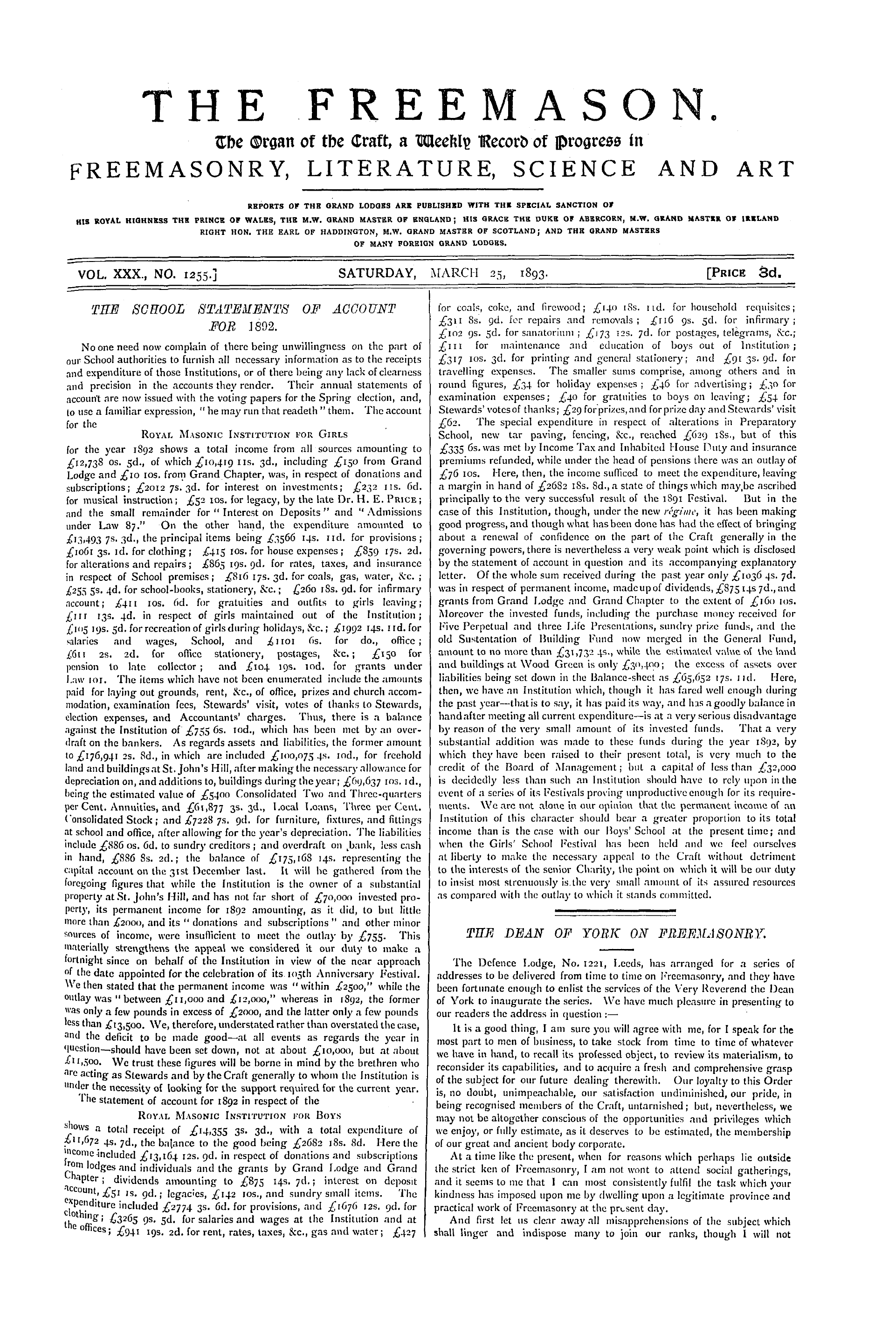
suppose that they obtain amongst those who have been enrolled in our Fraternity . The proper conception of Freemasonry which prevailed in days gone by is , \ think , altogether exploded . Men do not think of us and represent us to be such as old characatures and squibbs portrayed us—mere gluttons and bibulous people , whose conversation was flavoured with coarseness ,
and whose actions savoured of indecency . The whole truth and character of the Craft now-a-days forbids such imputations to be even snggested , but , still , there is an idea that , whatever we may profess , Freemasonry is really . good fellowship club . Our pedantic'and archaic expression of " banquets " conjures up in the public mind a profuse and intemperate participation in the luxuries of the table rather than that " refreshments " which precedes
or closes the season of " labour . " There is no reason why such frugal enjoyment should be intermitted . And it seems indeed a fact consistent with humanity itself that the partaking of food should be social rather than solitary , and that " the feast of reason and the flow of soul " may not only be compatable with , but actually in a great measure promoted by , aye ! and in its turn , reacting on and influencing the necessary nourishing and strengthening of the body .
Good fellowship is not the aim of our society , though in its true and legitimate sense it becomes an element in it , and in its due proportion and position is a feature which none need deprecate or be ashamed of . Secondly , Freemasonry is not a mere benefit society . That many members of the Craft do , in their seasons of adversity and need , receive substantial assistance from our funds is true . It is our pleasure and pride that it should be so , and part of our labours is to make the acquisition of our Charity funds as great , and the expenditure as efficient , as possible .
freemasonry would cease to be entitled to the very name of Fraternity if we merely greeted each other as brethren in the name of health and prosperity , and never " extended the right hand of fellowship " to one another in the season of happiness , sorrow , or adversity , unheeded the cause of the widows and fatherless children .
But it is one thing to rule Freemasonry because therein we feel there is a great opportunity and an unique agency for doing this , and another thing to enter it really with an eye to benefit ourselves . The two courses suggest two distinct and varied motions , the former that of the highest and most unselfish philanthropy , the latter that of very natural , very lawful , perhaps , but still simply commonplace self interest . It may be an act of
prudence to enter a benefit club , and it is , no doubt , great want of prudence to belong to nothing of the sort , and to make no provision for possible dark days , or for those dependent on us , but surely it ii a different and a higher course if the object is not self but others , not what we may get for ourselves , but how we can best utilise our means and capacities to promote the welfare of our brethren . In the former
instance Freemasonry becomes a mere waste of time and money if we have never made a claim upon it , or , at the best , it is a certain expenditure of time and money in the present , with a very improbable contingency of some possible advantage at some indefinite future . In the latter case Freemasonry becomes the means of a present and ever increasing advantage , and enlisting us amongst those who place Charity in the forefront of their
lives , and associating us with those who can give effect thereto in the most practical and substantial manner , very often kindling , always encouraging and stimulating the spirit of Charity , initiating many , furthering others in the pleasure and privilege of active interest in the welfare of others , which will in future animate and pervade their whole lives . And all this is utterly negatived if there is a consciousness that , after all , they are doing a sagacious stroke of business for a future day—one word for their brethren ,
two for themselves . No , no ! let us have benefit clubs by all means , and let the benefit be in the forefront . That is a legitimate and commendable duty . But let us not mix up philanthropy with self-interest , and parade the former , while we are really labouring to promote the latter . Let the latter be regarded as the accident , the remote contingency , the reluctant possibility ; the former as the aim and object which we have in view , and which as true and lawful Masons we desire to promote .
Again , rreemasonry is not a mere opportunity for indulging our taste in asthetics and gratifying our latent yearnings for ritualism . That such a predeliction lurks generally in the human heart there [ is no denying , and when separated from the "No Popery" cry , there is a general hankering for it . Where can you find an instance of enthusiasm which did not in some way express itself thereby , and the present appetite for it , and its
willingness to be satisfied with a very feeble instalment of it , and very little beyond is shown in the rapid development of the Salvation Army . But our Craft , has this invaluable protection against the abuse of this natural and necessary feeling , in that so muclvof our ceremonial takes place in private . There are a few special occasions when the Masonic regalia is exhibited before uninitiated eyes , but these are the exception , not the rule .
For the most part it is only seen in a lodge " close tiled , " and much of it only by the members of those different sections of our community to which it specially appertains . And there is great wisdom and strength in this . Our vestments and our ritual have distinctive and recognised meaning , and they are only seen by those who understand it . Ours is no empty parade of mere fanciful posture and tinsel to astonish the weak minds of those around us and to exalt ourselves , we practice it amongst those only who
appreciate it . It has a definite significance to us , and is emphatically , in our lodges , a tongue understanded of the people . Hence we are , happily , free from those discords on these subjects which prevail outside . Those who have no sympathy therewith keep away from our fellowship . Those who identify themselves with us become more and more satisfied with what is but the harmonious exponent , and illustrative of what is approved and practised by us all .
And , lastly , Freemasonry is not a religion . Many seem to fancy that in joining the Craft men in some way supersede or dishonour the faith which they hold ; renounce their Christianity for some vague and mystic theism ; and substitute strange doctrines for the recognised Articles of the Christian faith . Freemasonry is not and does not profess to no religion , but it
recognises religious truths , it inculcates and practices much which lies at the base of all true religion , and promotes a frame of mind and a temper which are most helpful to religion . I say nothing of the later developments of our Order , which profess and practise distinctive Christian dogmas and precepts , but speakingasa Master Mason , and thereforeof Masonry asa whole , and in the widestand most comprehensive meaningof the word , itoccupies , as itwere , the
The Dean Of York On Freemasonry.
ground which is common to all who hold anything deserving to be recognised as serious and sensible religious opinions it accentuates , dwells upon , inculcates , and encourages those cardinal principles and spiritual foundations without which anything worthy to be called a religion cannot exist , and when we meet we do not suppress the very name of God as if His very being were out of place in social life and philanthropic work . The bible
has its prominent and honoured place in our very midst , and reverence for things sacred is the very axiom of . our society and the virtues which religious teaching circulates and enjoins are here commemorated and extolled , and the typical religious man is here ever held up as an example to which every one should strive to attain . God forbid that any one should renounce his Christianity for Freemasonry and accept the Craft in lieu thereof , and
fancy that any attendance in lodge can be regarded as a substitute for it . But on the other hand no one can attentively listen to what is rehearsed and advocated here without feeling the more disposed to seek in those means which he holds most dear , the power to obtain to that tone of life and character which here are unanimously adopted and incessantly set out before him , and I do not say that it always do , because such is human
nature and men of liveliness become indifferent to what is familiar to them , and words and phrases even the most commendable become mere sounds and repetitions . But it is sometimes in an age when men are enticed to associate themselves together where the very name of God and the very mention of religion would be deemed an intrusion and a discord , jarring with the accepted routine and at variance with the purpose of their
gatherings , to feel that , at any rate , there is nothing in Freemasonry which can chill any devout aspirations , wound any tender conscience , or quicken any feelings or aspirations which are at variance with the best interests in this life or in another . I doubt if any really religious man has ever been pained by the recognised procedure of our Craft , and I would fain think that many wisely have been led to feel how true , how elevating , how really desirable is
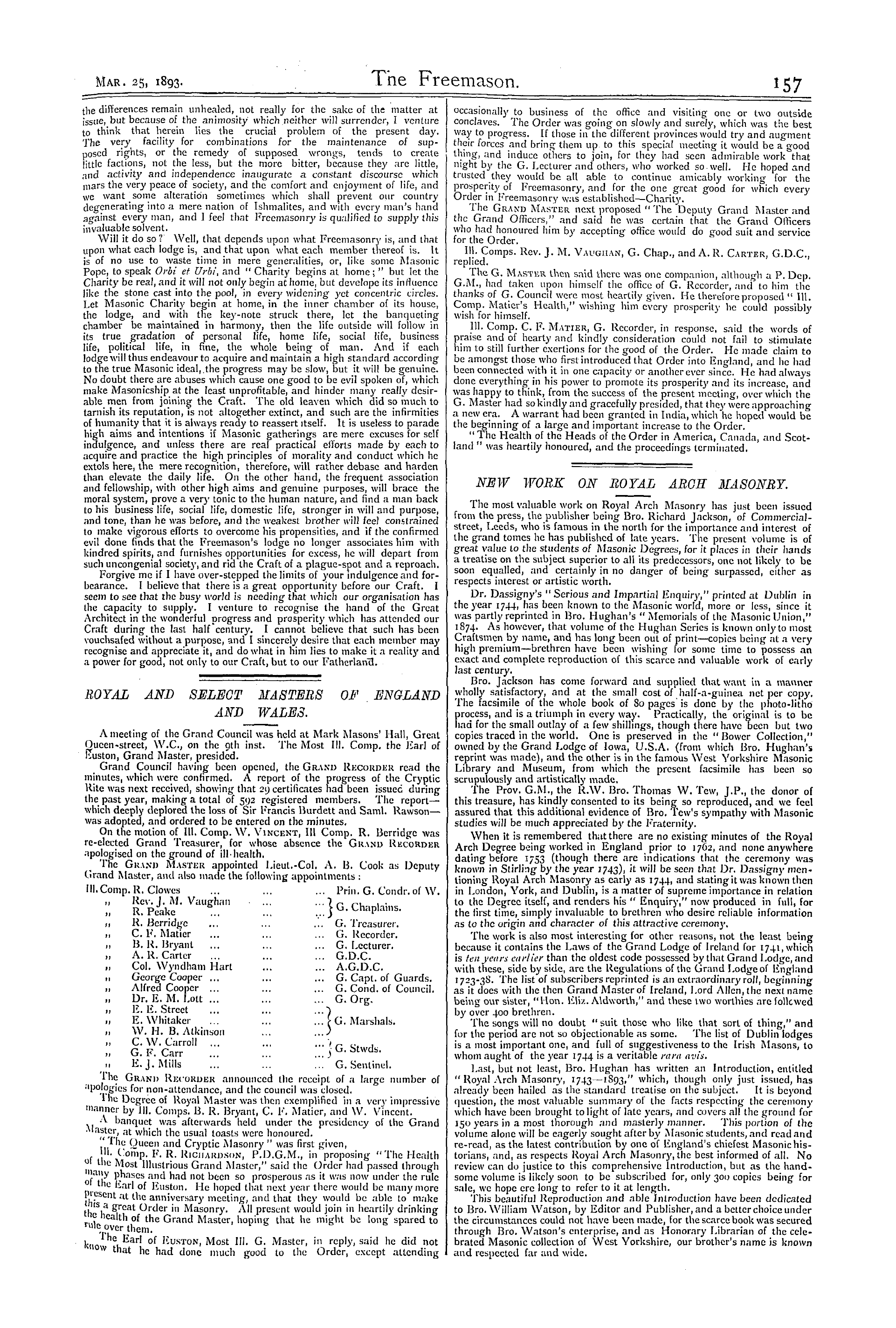
all that is upheld and advanced here , and has turned away to seek in the way which may best commend itself to his faith , how he may attain to the practice of such a " reasonable service . " To sum up thus we may say that the object of our society is to cultivate social intercourse and fraternal fellowship with the view of promoting acts of benevolence and Charity , and exalting and inculcating the practice of morality , and due reverence and loyal allegiance to the powers that be ,
whether of heaven and earth . And let us now glance at the constitution of the society , I mean of the individuals of which it is composed , and what a wide and comprehensive gathering of all sorts and conditions of men , and may I say without irreverence of " all nations , and kindreds , and peoples , and tongues , " for it embraces almost every nationality and permeates every quarter of the globe . But to confine ourselves to our own land first , it
gathers together men of all ranks and stations , from the heir to the throne to the working man , perhaps few of the latter , but if we may so speak it is abundantly recruited from the upper and middle classes of society . And they are men of all shades of politics and all schools of religious thought , of the highest as well as the simplest intellectual culture , men of every profession and calling , clerical and lay , men of different temperaments and
dispositions of varied gifts , of various professions , the richest to the poorest , the man of business and the man of leisure , the man of study and the man of action , the man of commerce and the ' man of agriculture , the man of science and the man of politics , the employer and the employed , the man of the most independent and of the most subordinate positions . What a wonderful organisation which masses all these together ,
brings them on to a common neutral ground , where ( apart from all earthly circumstances and surroundings , all political or religious opinions ) they meet and are honoured , not so much for their rank or position without , as for their position and rank within , and it is a social democracy , and yet controlled by a discipline , which is legally submitted to , and cheerfully recognised and governed by , an executive which retains the confidence of the
members generally , and is obeyed and honoured . The members ( as a body ) are content with their status ; there are no factions or parties , no " caves " or latent movements of disaffection and sedition . A policy of mutual kindness and goodwill animates the whole , and nowhere is genial courtesy and kindly interest shown more generally than in a lodge . I do not want to colour the picture too highly , or to imply that there are no
blunders and no exceptions to the rule ; but , speaking in general terms , I think that I am fairly representing the condition of the Craft at the present time . Now , surely such an organisation is not effeted out of date at the present time . If the Masonry of primitive days had its mission and its sphere of usefulness , when the world was for the most part rude and uncivilised , surely it has a different perhaps , but an equally , nay , a far more
important , sphere of usefulness at the present time , and when lite is so busy and active , and the rapid progress of events and opinions seems acting with centrifugal force , and whirling men apart from each other , even while they cry the most loudly for unity . It would be indeed a shame , a grevious abuse of great opportunities , a criminal waste of a grand and intricate organisation ( which seems to have been permitted to grow together for some great
purpose ) , if it was allowed to subside into a mere occasion for indulgence , for mere parade , for mere utterance of familiar formularies , and mere p latitudes , and the mere assumption of costume . Such a corporate body ought to have an active and a telling influence upon the world ( political and relig ious and social ) around us , and none the less real , none the less powerful , because it should be indirect and not direct . We do not want to have politicians
soliciting the Freemason ' s vote ; we do not want to have gatherings to report the Freemason ' s conscience ; we do not want to identify ourselves , as a body corporate , with any one man , or any one party of men ; but what we may do , and what it would be a great thing to do , would be so to influence the temper and tone of the times that questions of importance may be discussed on their merits , apart from that heat of temper and those angry personalities 01
which too often effectually bar any really profitable action , and the cause success tempered , and the cause of defeats soothed , and thus differences prevented from resulting in muta ! severance and dislike . I believe that Masons individually differ only widely upon all questions natural and religious , and I hope that they will continue to do so , for it is the best evidence of what I may call the catholicity of our body ; but the frequent gathering mutual associations \~
together on a common ground ana on a common w--must soften any feeling of asperity and animosity amongst us , and » ' produce no change of conviction , at least make them " agree to differ , do not suppose that all the world are going to become Freemasons , and t " in due time we shall enrol all the great and divergent parties in Church an State , but a good example is very catching , and the evidence on such a ' ? ° j scale as ours , of men able to differ , and yet able to teach a fellowship harmony and mutual respect , will not be ineffectual if only it is sincere . > can notice many instances where differences have provoked animosities , » '


Note: This text has been automatically extracted via Optical Character Recognition (OCR) software.
The Dean Of York On Freemasonry.
suppose that they obtain amongst those who have been enrolled in our Fraternity . The proper conception of Freemasonry which prevailed in days gone by is , \ think , altogether exploded . Men do not think of us and represent us to be such as old characatures and squibbs portrayed us—mere gluttons and bibulous people , whose conversation was flavoured with coarseness ,
and whose actions savoured of indecency . The whole truth and character of the Craft now-a-days forbids such imputations to be even snggested , but , still , there is an idea that , whatever we may profess , Freemasonry is really . good fellowship club . Our pedantic'and archaic expression of " banquets " conjures up in the public mind a profuse and intemperate participation in the luxuries of the table rather than that " refreshments " which precedes
or closes the season of " labour . " There is no reason why such frugal enjoyment should be intermitted . And it seems indeed a fact consistent with humanity itself that the partaking of food should be social rather than solitary , and that " the feast of reason and the flow of soul " may not only be compatable with , but actually in a great measure promoted by , aye ! and in its turn , reacting on and influencing the necessary nourishing and strengthening of the body .
Good fellowship is not the aim of our society , though in its true and legitimate sense it becomes an element in it , and in its due proportion and position is a feature which none need deprecate or be ashamed of . Secondly , Freemasonry is not a mere benefit society . That many members of the Craft do , in their seasons of adversity and need , receive substantial assistance from our funds is true . It is our pleasure and pride that it should be so , and part of our labours is to make the acquisition of our Charity funds as great , and the expenditure as efficient , as possible .
freemasonry would cease to be entitled to the very name of Fraternity if we merely greeted each other as brethren in the name of health and prosperity , and never " extended the right hand of fellowship " to one another in the season of happiness , sorrow , or adversity , unheeded the cause of the widows and fatherless children .
But it is one thing to rule Freemasonry because therein we feel there is a great opportunity and an unique agency for doing this , and another thing to enter it really with an eye to benefit ourselves . The two courses suggest two distinct and varied motions , the former that of the highest and most unselfish philanthropy , the latter that of very natural , very lawful , perhaps , but still simply commonplace self interest . It may be an act of
prudence to enter a benefit club , and it is , no doubt , great want of prudence to belong to nothing of the sort , and to make no provision for possible dark days , or for those dependent on us , but surely it ii a different and a higher course if the object is not self but others , not what we may get for ourselves , but how we can best utilise our means and capacities to promote the welfare of our brethren . In the former
instance Freemasonry becomes a mere waste of time and money if we have never made a claim upon it , or , at the best , it is a certain expenditure of time and money in the present , with a very improbable contingency of some possible advantage at some indefinite future . In the latter case Freemasonry becomes the means of a present and ever increasing advantage , and enlisting us amongst those who place Charity in the forefront of their
lives , and associating us with those who can give effect thereto in the most practical and substantial manner , very often kindling , always encouraging and stimulating the spirit of Charity , initiating many , furthering others in the pleasure and privilege of active interest in the welfare of others , which will in future animate and pervade their whole lives . And all this is utterly negatived if there is a consciousness that , after all , they are doing a sagacious stroke of business for a future day—one word for their brethren ,
two for themselves . No , no ! let us have benefit clubs by all means , and let the benefit be in the forefront . That is a legitimate and commendable duty . But let us not mix up philanthropy with self-interest , and parade the former , while we are really labouring to promote the latter . Let the latter be regarded as the accident , the remote contingency , the reluctant possibility ; the former as the aim and object which we have in view , and which as true and lawful Masons we desire to promote .
Again , rreemasonry is not a mere opportunity for indulging our taste in asthetics and gratifying our latent yearnings for ritualism . That such a predeliction lurks generally in the human heart there [ is no denying , and when separated from the "No Popery" cry , there is a general hankering for it . Where can you find an instance of enthusiasm which did not in some way express itself thereby , and the present appetite for it , and its
willingness to be satisfied with a very feeble instalment of it , and very little beyond is shown in the rapid development of the Salvation Army . But our Craft , has this invaluable protection against the abuse of this natural and necessary feeling , in that so muclvof our ceremonial takes place in private . There are a few special occasions when the Masonic regalia is exhibited before uninitiated eyes , but these are the exception , not the rule .
For the most part it is only seen in a lodge " close tiled , " and much of it only by the members of those different sections of our community to which it specially appertains . And there is great wisdom and strength in this . Our vestments and our ritual have distinctive and recognised meaning , and they are only seen by those who understand it . Ours is no empty parade of mere fanciful posture and tinsel to astonish the weak minds of those around us and to exalt ourselves , we practice it amongst those only who
appreciate it . It has a definite significance to us , and is emphatically , in our lodges , a tongue understanded of the people . Hence we are , happily , free from those discords on these subjects which prevail outside . Those who have no sympathy therewith keep away from our fellowship . Those who identify themselves with us become more and more satisfied with what is but the harmonious exponent , and illustrative of what is approved and practised by us all .
And , lastly , Freemasonry is not a religion . Many seem to fancy that in joining the Craft men in some way supersede or dishonour the faith which they hold ; renounce their Christianity for some vague and mystic theism ; and substitute strange doctrines for the recognised Articles of the Christian faith . Freemasonry is not and does not profess to no religion , but it
recognises religious truths , it inculcates and practices much which lies at the base of all true religion , and promotes a frame of mind and a temper which are most helpful to religion . I say nothing of the later developments of our Order , which profess and practise distinctive Christian dogmas and precepts , but speakingasa Master Mason , and thereforeof Masonry asa whole , and in the widestand most comprehensive meaningof the word , itoccupies , as itwere , the
The Dean Of York On Freemasonry.
ground which is common to all who hold anything deserving to be recognised as serious and sensible religious opinions it accentuates , dwells upon , inculcates , and encourages those cardinal principles and spiritual foundations without which anything worthy to be called a religion cannot exist , and when we meet we do not suppress the very name of God as if His very being were out of place in social life and philanthropic work . The bible
has its prominent and honoured place in our very midst , and reverence for things sacred is the very axiom of . our society and the virtues which religious teaching circulates and enjoins are here commemorated and extolled , and the typical religious man is here ever held up as an example to which every one should strive to attain . God forbid that any one should renounce his Christianity for Freemasonry and accept the Craft in lieu thereof , and
fancy that any attendance in lodge can be regarded as a substitute for it . But on the other hand no one can attentively listen to what is rehearsed and advocated here without feeling the more disposed to seek in those means which he holds most dear , the power to obtain to that tone of life and character which here are unanimously adopted and incessantly set out before him , and I do not say that it always do , because such is human
nature and men of liveliness become indifferent to what is familiar to them , and words and phrases even the most commendable become mere sounds and repetitions . But it is sometimes in an age when men are enticed to associate themselves together where the very name of God and the very mention of religion would be deemed an intrusion and a discord , jarring with the accepted routine and at variance with the purpose of their
gatherings , to feel that , at any rate , there is nothing in Freemasonry which can chill any devout aspirations , wound any tender conscience , or quicken any feelings or aspirations which are at variance with the best interests in this life or in another . I doubt if any really religious man has ever been pained by the recognised procedure of our Craft , and I would fain think that many wisely have been led to feel how true , how elevating , how really desirable is
all that is upheld and advanced here , and has turned away to seek in the way which may best commend itself to his faith , how he may attain to the practice of such a " reasonable service . " To sum up thus we may say that the object of our society is to cultivate social intercourse and fraternal fellowship with the view of promoting acts of benevolence and Charity , and exalting and inculcating the practice of morality , and due reverence and loyal allegiance to the powers that be ,
whether of heaven and earth . And let us now glance at the constitution of the society , I mean of the individuals of which it is composed , and what a wide and comprehensive gathering of all sorts and conditions of men , and may I say without irreverence of " all nations , and kindreds , and peoples , and tongues , " for it embraces almost every nationality and permeates every quarter of the globe . But to confine ourselves to our own land first , it
gathers together men of all ranks and stations , from the heir to the throne to the working man , perhaps few of the latter , but if we may so speak it is abundantly recruited from the upper and middle classes of society . And they are men of all shades of politics and all schools of religious thought , of the highest as well as the simplest intellectual culture , men of every profession and calling , clerical and lay , men of different temperaments and
dispositions of varied gifts , of various professions , the richest to the poorest , the man of business and the man of leisure , the man of study and the man of action , the man of commerce and the ' man of agriculture , the man of science and the man of politics , the employer and the employed , the man of the most independent and of the most subordinate positions . What a wonderful organisation which masses all these together ,
brings them on to a common neutral ground , where ( apart from all earthly circumstances and surroundings , all political or religious opinions ) they meet and are honoured , not so much for their rank or position without , as for their position and rank within , and it is a social democracy , and yet controlled by a discipline , which is legally submitted to , and cheerfully recognised and governed by , an executive which retains the confidence of the
members generally , and is obeyed and honoured . The members ( as a body ) are content with their status ; there are no factions or parties , no " caves " or latent movements of disaffection and sedition . A policy of mutual kindness and goodwill animates the whole , and nowhere is genial courtesy and kindly interest shown more generally than in a lodge . I do not want to colour the picture too highly , or to imply that there are no
blunders and no exceptions to the rule ; but , speaking in general terms , I think that I am fairly representing the condition of the Craft at the present time . Now , surely such an organisation is not effeted out of date at the present time . If the Masonry of primitive days had its mission and its sphere of usefulness , when the world was for the most part rude and uncivilised , surely it has a different perhaps , but an equally , nay , a far more
important , sphere of usefulness at the present time , and when lite is so busy and active , and the rapid progress of events and opinions seems acting with centrifugal force , and whirling men apart from each other , even while they cry the most loudly for unity . It would be indeed a shame , a grevious abuse of great opportunities , a criminal waste of a grand and intricate organisation ( which seems to have been permitted to grow together for some great
purpose ) , if it was allowed to subside into a mere occasion for indulgence , for mere parade , for mere utterance of familiar formularies , and mere p latitudes , and the mere assumption of costume . Such a corporate body ought to have an active and a telling influence upon the world ( political and relig ious and social ) around us , and none the less real , none the less powerful , because it should be indirect and not direct . We do not want to have politicians
soliciting the Freemason ' s vote ; we do not want to have gatherings to report the Freemason ' s conscience ; we do not want to identify ourselves , as a body corporate , with any one man , or any one party of men ; but what we may do , and what it would be a great thing to do , would be so to influence the temper and tone of the times that questions of importance may be discussed on their merits , apart from that heat of temper and those angry personalities 01
which too often effectually bar any really profitable action , and the cause success tempered , and the cause of defeats soothed , and thus differences prevented from resulting in muta ! severance and dislike . I believe that Masons individually differ only widely upon all questions natural and religious , and I hope that they will continue to do so , for it is the best evidence of what I may call the catholicity of our body ; but the frequent gathering mutual associations \~
together on a common ground ana on a common w--must soften any feeling of asperity and animosity amongst us , and » ' produce no change of conviction , at least make them " agree to differ , do not suppose that all the world are going to become Freemasons , and t " in due time we shall enrol all the great and divergent parties in Church an State , but a good example is very catching , and the evidence on such a ' ? ° j scale as ours , of men able to differ , and yet able to teach a fellowship harmony and mutual respect , will not be ineffectual if only it is sincere . > can notice many instances where differences have provoked animosities , » '